
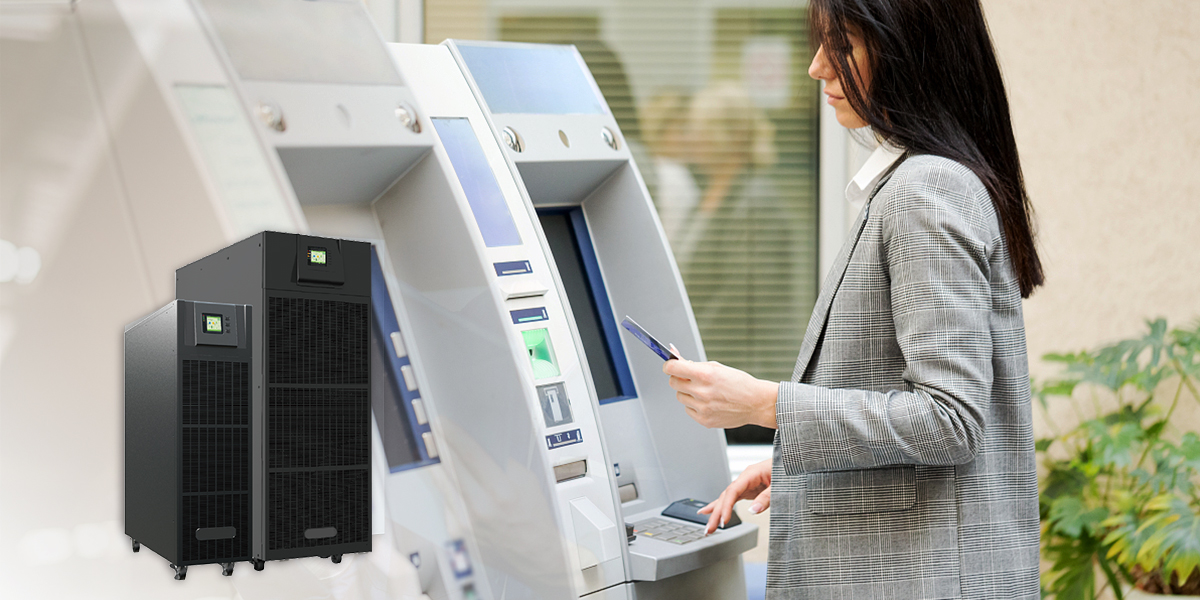
UPS architecture has a direct influence on how critical facilities manage power continuity, efficiency, maintenance, and future expansion. Traditional fixed-capacity systems can remain suitable for stable environments, but enterprises with changing loads increasingly need greater flexibility. Comparing modular UPS architecture with conventional designs helps technical teams understand how scalability, redundancy, efficiency, and lifecycle considerations can affect infrastructure planning.
Traditional UPS Architectures and Their Limitations

Traditional UPS systems are often designed around a fixed power capacity. Once installed, the system generally provides a predetermined amount of electrical protection, making the initial sizing decision particularly important.
This architecture can work well when a facility has relatively predictable loads and limited expectations for expansion. However, enterprise environments are rarely static. Data center capacity can increase, production equipment can be added, and digital infrastructure can evolve considerably during the service life of a power system.
Oversizing a fixed-capacity UPS may leave substantial capacity underutilized during the early stages of operation. Undersizing, on the other hand, can create challenges when additional equipment is introduced. Reconfiguring a conventional system may require significant engineering work, additional equipment, or even replacement.
These considerations have encouraged many infrastructure planners to examine modular architecture as an alternative for applications where flexibility has greater importance.
How Modular Architecture Changes UPS Planning
The core difference between modular and traditional architecture is the way power capacity is organized. A modular UPS divides the system into power modules that can operate together within a common architecture.
This creates greater flexibility when determining how much capacity needs to be installed at different stages of a facility’s development. Instead of committing to a large, fixed capacity from the beginning, an organization can build the system around current requirements and plan for future expansion.
KSTAR applies this modular approach within its UPS portfolio. Its modular UPS supports up to six main units operating in parallel redundancy. This gives engineering teams more options when balancing capacity, availability, and future growth.
For facilities with changing electrical requirements, modularity can therefore become a practical part of capacity planning. The system is not treated as a static asset, but as infrastructure that can adapt as the operating environment develops.
Redundancy and Availability Take on Greater Importance
In mission-critical applications, maintaining power availability is often more important than simply achieving a target capacity. Data centers, financial systems, manufacturing controls, and other sensitive environments may need the UPS architecture to continue supporting critical loads even when part of the power system requires attention.
Modular systems can provide additional flexibility in designing redundancy because multiple modules can operate together. Capacity and redundancy can be considered as related design factors rather than entirely separate decisions.
The modular UPS technology associated with KSTAR is designed with parallel redundancy capabilities, allowing organizations to develop configurations according to their application requirements. This can be especially useful in facilities where continuity is essential, and infrastructure must accommodate maintenance or future capacity changes.
Traditional systems can also be engineered for redundancy, but the fixed nature of their architecture may make later changes more complicated. Modular construction offers an alternative that can be easier to adjust as operational needs evolve.
Efficiency Can Separate Modern and Conventional Approaches
Energy efficiency is another important point of comparison. A UPS can remain in operation for many years, meaning efficiency directly influences long-term electricity consumption and heat generation.
The KSTAR UPS solution uses a three-level topology. Its online efficiency is approximately 95.8% to 96%, while ECO mode can reach up to 99% under suitable operating conditions.
Such figures are particularly relevant for large facilities where UPS equipment operates continuously. Reducing conversion losses can help lower energy consumption and may also reduce the associated cooling burden.
However, efficiency should not be assessed as an isolated specification. Actual operating performance depends on factors such as load conditions, redundancy configuration, operating mode, battery system, and site environment. A useful comparison between modular and traditional architecture therefore considers efficiency together with availability and practical operating requirements.
Battery Flexibility Supports Different Facility Requirements
The battery system is an essential part of any UPS architecture because it supplies stored energy when utility power is interrupted. Battery requirements can vary significantly depending on the application, desired runtime, available space, maintenance strategy, and operational procedures.
Traditional UPS installations may be designed around a particular battery configuration that remains relatively fixed throughout the system lifecycle. Modular approaches can offer more flexibility when organizations need to adapt the overall backup architecture.
The KSTAR modular UPS solution supports both VRLA and lithium battery configurations. This provides project teams with greater choice when considering the technical and operational requirements of a facility.
Battery planning should also include monitoring, environmental management, maintenance, and replacement schedules. These factors influence the real reliability of the backup system and should be considered during system design rather than after installation.
Maintenance and Expansion Should Be Evaluated Together
Another important difference between the two architectures is how they respond to maintenance and expansion. A critical facility cannot always afford lengthy shutdowns simply because power equipment needs to be serviced or upgraded.
A modular architecture can provide greater flexibility because individual modules are part of a larger system structure. This can give operators additional options when planning maintenance, depending on the specific configuration and operating requirements.
Expansion is similarly important. A growing data center or industrial facility may need additional capacity without replacing an otherwise functional UPS system. Modular infrastructure can make this requirement easier to incorporate into long-term planning.
For this reason, procurement teams should evaluate UPS architecture over its complete lifecycle. Installation, maintenance, future expansion, spare parts, energy consumption, and eventual replacement can all affect total cost of ownership.
Choosing UPS Architecture for Different Applications
There is no single architecture that is appropriate for every facility. Traditional systems can remain practical where electrical demand is stable and future changes are limited. Modular systems have become increasingly attractive where organizations need greater scalability, redundancy flexibility, or operational adaptability.
Data centers are a clear example because computing requirements can change substantially over time. Manufacturing facilities can also benefit when production capacity is expected to grow. Financial and transportation infrastructure may place greater emphasis on continuity and redundancy.
For these applications, UPS power solutions should be assessed against the facility’s actual load profile, redundancy objectives, battery requirements, expansion plans, and efficiency targets rather than selected solely according to initial purchase cost.
Making the Right Choice for Long-Term Infrastructure
The comparison between modular and traditional UPS architecture ultimately comes down to how well each design matches the facility’s operating requirements. Fixed-capacity systems can be effective for stable environments, while modular designs provide additional flexibility when capacity, redundancy, and future expansion are important.
For enterprises managing dynamic critical infrastructure, evaluating the complete lifecycle can provide a clearer basis for decision-making. Capacity flexibility, efficiency, battery options, maintenance requirements, and scalability all deserve consideration when selecting a UPS architecture that can support long-term operational needs.
