
In modern industrial engineering, complex mechanical systems are historically composed of dozens, or even hundreds, of discrete parts. Traditional manufacturing methods like turning, milling, and casting dictate that intricate features must be split into simple, machinable shapes. These individual components are subsequently joined using threaded fasteners, brazed joints, or specialized welds. However, every joint interface introduces potential structural weaknesses, thermal barriers, and leak vectors.
As performance demands intensify in sectors like aerospace, automotive, and heavy industry, engineering teams are re-evaluating traditional assembly strategies. Through modern digital fabrication, part consolidation offers a compelling approach to eliminate joint interfaces and optimize component functionality.

The Material and Operational Overhead of Multi-Piece Systems
Conventional assembly architectures carry substantial hidden costs. When an engineering team designs a fluid manifold, heat exchanger, or structural housing, traditional manufacturing constraints often require breaking the system into separate housings, internal vanes, mounting flanges, and sealing gaskets. Each individual component requires dedicated engineering documentation, quality control inspections, physical inventory tracking, and specialized assembly tooling.
Furthermore, physical joints create operational vulnerabilities. Threaded fasteners can loosen under vibrational stress, while brazed or welded seams can degrade under cyclic thermal loads. Accumulated manufacturing tolerances—known as tolerance stack-up—can also lead to alignment issues during final assembly. These factors combined increase total production lead time and inflate lifetime maintenance overhead.
Redefining Design Logic Through Additive Principles
The shift toward integrated component design relies on a fundamentally different manufacturing logic. Instead of cutting material away from individual billets, 3d metal printing technology builds structures sequentially layer by layer directly from a three-dimensional CAD model. This layer-by-layer deposition allows engineers to combine multi-piece sub-assemblies into a single continuous solid body.
Design for Additive Manufacturing (DfAM) empowers engineers to merge internal flow paths, structural supports, and mounting features into one cohesive geometry. For instance, internal passageways that previously required separate tube networks and threaded ports can be routed directly within the structural wall of a housing. Because the process constructs the component as a single piece, internal flanges, sealing grooves, and mechanical fasteners become entirely redundant.
Key Technical Advantages of Integrated Single-Piece Components
Consolidating multiple sub-assemblies into a unified structure yields significant mechanical and operational benefits across demanding industrial applications:
Mass Reduction: Removing flanges, bolts, and heavy joint interfaces can reduce component mass when redundant interfaces and material can be eliminated.Engineers can allocate material strictly where structural loads require it, using topology optimization and internal lattice structures.
Enhanced Reliability: Eliminating brazed seams, welds, and elastomeric seals removes primary leak vectors and stress concentration points. This process may reduce certain joint-related failure risks, subject to material qualification and component testing.
Optimized Fluid and Thermal Dynamics: Conventional drilled channels require straight-line paths and right-angle turns that cause fluid turbulence and pressure drops. Additive techniques allow curved internal channels that optimize fluid velocity and heat transfer efficiency.
Supply Chain Streamlining: Replacing a twenty-part assembly with a single printed part simplifies bill-of-materials (BOM) management. It reduces inventory holding costs, eliminates sub-assembly labor, and may reduce assembly steps and overall lead time in suitable applications.
Real-World Industrial Application Scenarios
Part consolidation is already transforming critical components across several high-tech industries.
Aerospace Propulsion Manifolds
Rocket engine injectors and jet fuel nozzles have historically been assembled from numerous precision-machined segments joined via high-temperature brazing. Each individual part needed separate CNC machining, strict dimensional inspection, and careful fixturing before assembly, while brazed joints demanded lengthy thermal cycles and rigorous quality validation to guard against high-temperature failure during operation.
Redesigning these assemblies for unified metal printing allows manufacturers to produce the entire nozzle as a single component. This eliminates high-stress brazing joints while reducing overall component weight. Consolidating many discrete parts into one monolithic print also cuts down on lengthy assembly workflows and reduces the risk of leakage at joining interfaces.
In addition, additive manufacturing enables optimized internal flow geometries that would be impractical to machine conventionally, improving fluid distribution and thermal management within propulsion systems. These benefits support more robust, compact propulsion hardware suited for demanding aerospace operating environments.
Industrial Automation End-Effectors
Robotic gripping tools and pneumatic manifolds frequently feature intricate air pathways. Integrating these air passages directly inside the structural body of a lightweight aluminum or titanium robotic arm reduces overall weight, allowing faster robot acceleration, less motor wear, and higher payload capacity.
High-Performance Fluid Control Valves
In energy and chemical processing equipment, internal valve bodies often suffer from seal degradation under aggressive chemical conditions. Consolidated valve housings eliminate external split-lines, allowing high-pressure fluid retention with fewer failure points.
Strategic Manufacturing Partnerships
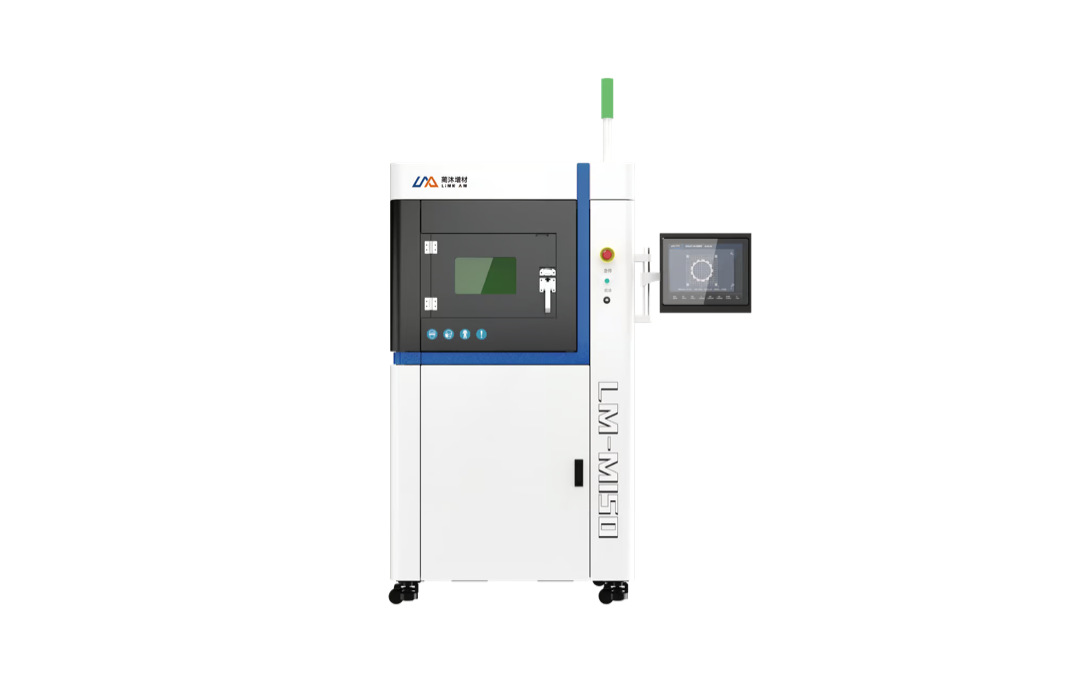
Successfully transitioning from traditional multi-piece assemblies to integrated single-piece designs requires reliable hardware platforms, robust metallurgical expertise, and specialized technical support. LiMN 3D is a high-tech enterprise specializing in metal additive manufacturing technology. They focus on the research, development, and production of Selective Laser Melting (SLM) equipment, alongside customized processing services and forming technologies. Their industrial systems help engineering organizations across aerospace, automotive, medical, and research sectors implement advanced part consolidation strategies.
Conclusion
Part consolidation through advanced metal printing represents a fundamental evolution in industrial design and manufacturing efficiency. By replacing complex, multi-piece assemblies with integrated single-piece geometries, organizations can systematically reduce weight, eliminate fluid leak paths, and streamline supply chains. As engineering teams continue to leverage digital design tools, the ability to print consolidated metal structures will remain a key driver of high-performance manufacturing.
