
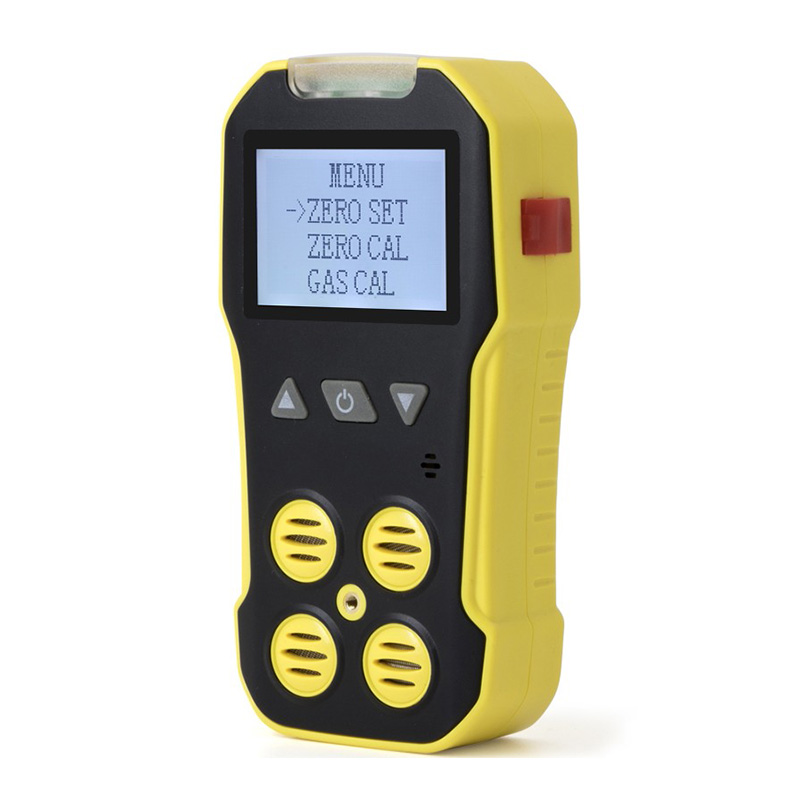
Electrochemical sensors are widely used for detecting toxic gases because they can provide continuous measurements in compact instruments. They are commonly found in portable and fixed monitoring equipment used across industrial environments. However, the presence of other gases can influence a sensor’s response. This phenomenon, known as cross-sensitivity, is an important consideration when evaluating gas detection accuracy.
For safety teams, understanding cross-sensitivity helps prevent misleading readings and supports better detector selection, calibration, and maintenance. The issue becomes particularly important in workplaces where several chemicals may be present simultaneously.
What Is Electrochemical Sensor Cross-Sensitivity?

An electrochemical sensor detects a target gas through an electrochemical reaction that produces an electrical signal related to gas concentration. The sensor is designed to respond preferentially to a particular analyte, but its chemistry may also react with other substances.
NIOSH notes that electrochemical sensors designed for toxic gases can be non-specific and cross-sensitive to other compounds. Sensor specificity depends partly on factors such as the membrane, electrode material, and potential used to control unwanted reactions.
A cross-sensitive gas may therefore produce a signal that the instrument interprets as the target gas. Depending on the interfering substance and sensor design, the result can be a false high reading, a reduced response, or even sensor damage.
Why Cross-Sensitivity Matters for Gas Detector Accuracy
A Gas Detector is intended to provide information that workers and safety professionals can use to assess atmospheric conditions. If another chemical affects the sensor, however, the displayed concentration may not accurately represent the actual target-gas concentration.
This does not mean electrochemical sensors are unsuitable for industrial monitoring. Rather, their performance must be evaluated in the context of the actual atmosphere. A sensor that performs appropriately in a relatively simple environment may require additional consideration in a process area containing multiple reactive gases.
Common Sources of Cross-Sensitivity
Cross-sensitivity depends on the specific sensor and interfering chemical, so there is no universal list that applies to every instrument. For example, NIOSH documentation describes how electrochemical toxic-gas sensors can respond to compounds other than the intended analyte.
Environmental conditions can also affect sensor performance. Temperature extremes may change response characteristics, while high humidity and corrosive atmospheres can affect some monitoring equipment. These factors should be considered alongside chemical interference rather than treated as separate issues.
Check Sensor Selectivity Before Choosing a Detector
When purchasing a Gas Detector, users should first identify the gases that may be present in the workplace. Review process chemicals, Safety Data Sheets, previous monitoring results, and potential byproducts before selecting the sensor configuration.
The detector’s technical documentation should then be checked for known interfering substances. OSHA recommends evaluating sensitivity, specificity, response time, environmental conditions, and potential interferences when selecting direct-reading instruments.
This step is especially important for multi-gas instruments. Several sensors may operate simultaneously in the same device, and the calibration gas or surrounding atmosphere may affect more than one sensor. The selected instrument should therefore be evaluated as a complete system rather than by considering each sensor in isolation.
Calibration Does Not Eliminate Cross-Sensitivity
Calibration establishes the relationship between the instrument’s response and a known concentration of calibration gas. It is essential for reliable measurements, but calibration alone cannot guarantee that the sensor will distinguish the target gas from every possible interferent.
OSHA recommends following the manufacturer’s calibration procedures and using appropriate calibration gas. Its guidance also emphasizes that proper maintenance and calibration help ensure direct-reading monitors provide reliable measurements.
Where practical, the calibration and verification approach should reflect the actual monitoring application. If an atmosphere contains known interfering substances, safety professionals should consult the detector manufacturer and determine whether additional evaluation or an alternative monitoring method is necessary.
Consider the Complete Monitoring Environment
Sensor performance should be considered alongside sampling method and workplace conditions. Portable detectors using diffusion sampling can be convenient for personal monitoring, while pumped instruments may be useful when remote or localized sampling is required.
Bosean‘s portable gas detector portfolio includes single-gas and multi-gas detectors, as well as gas leak and other specialized detector categories. The range allows industrial users to consider different configurations based on the gases and monitoring tasks involved.
For example, the BH-4A 4-in-1 portable multi-gas detector uses plug-in electrochemical sensors for O₂, H₂S, and CO, while combustible gas detection uses a plug-in catalytic combustion sensor. Its published specifications include a response time of no more than 30 seconds and an accuracy of no more than ±5% of full scale. These specifications apply specifically to the BH-4A and should not be generalized to other models.
Maintenance and Exposure History Matter
Cross-sensitivity is only one potential source of inaccurate readings. Sensors can also experience performance changes after exposure to unusually high concentrations, corrosive substances, or other harsh conditions.
Routine maintenance should therefore include calibration checks, functional testing, inspection, and appropriate sensor replacement. Workers should record unusual exposure events and follow the manufacturer’s procedures before returning affected equipment to normal service.
Use Cross-Sensitivity Information in Safety Planning
A practical gas-monitoring program should document the target gases, known interferents, sensor type, alarm thresholds, calibration procedure, and required response actions. This information can help safety teams interpret unusual readings and avoid assuming that every displayed value represents an actual increase in the target gas.
When readings appear inconsistent with process conditions, investigate the atmosphere rather than immediately assuming the detector has failed. A different chemical, environmental condition, sampling problem, or sensor issue may be responsible.
For critical applications, direct-reading monitoring can also be complemented by other validated sampling and analytical techniques.
Company Introduction
Bosean Tech specializes in industrial safety, environmental monitoring, and professional measurement, with a product portfolio covering portable gas detectors, fixed gas detection systems, sensors, laser rangefinders, and radiation detection equipment. Its technologies support applications including smart mines, smart gas networks, smart cities, smart industrial parks, energy storage safety, and smart environmental protection.
Guided by the brand value Precision for Safety, Accuracy for Performance, Bosean Tech focuses on reliable sensing and measurement while addressing the practical safety and efficiency needs of professional users. Positioned as a provider of intelligent sensing technology and a solution partner for industrial safety and environmental monitoring, the company goes beyond hardware by delivering safe, precise, and reliable detection solutions. For application-specific sensor requirements, “Contact Us” to discuss the gases, operating conditions, and monitoring objectives involved.
