
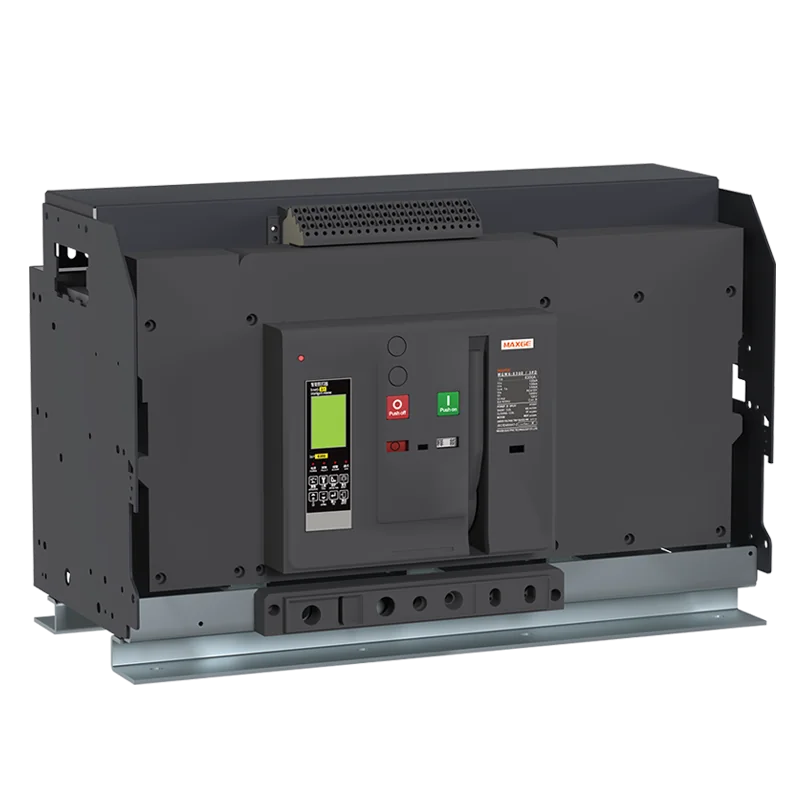
When selecting an air circuit breaker for an international electrical project, technical performance is only part of the decision. Compliance with the applicable standard can affect system design, product acceptance, installation, inspection, and long term maintenance. For project teams working across different markets, understanding the differences between IEC and UL requirements is therefore essential.
IEC and UL are not simply two versions of the same standard. They reflect different regulatory and engineering frameworks, and an air circuit breaker selected for one market may not automatically satisfy the requirements of another. Knowing what each standard covers can help engineers, contractors, distributors, and purchasing teams make more informed decisions.

Understanding IEC Requirements for Air Circuit Breakers
For many international electrical installations, IEC 60947-2 is a key reference for circuit breakers. The current IEC 60947-2:2024 standard applies to circuit breakers with rated voltages up to 1,000 V AC or 1,500 V DC and establishes requirements related to their operation, performance, and testing.
Under the IEC framework, an air circuit breaker is commonly evaluated according to parameters such as rated current, rated operational voltage, short circuit performance, insulation characteristics, and operating conditions. These specifications allow engineers to assess whether a product is appropriate for a particular low-voltage distribution system.
The term “air circuit breaker” refers to the use of air as the arc extinguishing medium. Such breakers are commonly applied in main distribution systems where higher current ratings and coordinated protection are required. They can be found in industrial facilities, commercial buildings, power distribution systems, and other installations where reliable switching and protection are important.
How UL Requirements Differ
For projects intended for the North American market, UL requirements may become a critical part of product selection and system approval. UL 1066 covers low voltage AC and DC power circuit breakers used in enclosures, providing a different certification and evaluation framework from IEC 60947-2.
This distinction matters because ratings, testing methods, marking requirements, and certification expectations can differ between standards. A product that meets an IEC requirement should not automatically be assumed to carry the necessary UL certification for a specific application.
Project teams should therefore review the applicable project specifications before selecting an air circuit breaker. The intended country, switchgear configuration, electrical ratings, certification requirements, and local authority requirements should all be considered during the technical evaluation.
Choosing the Right Air Circuit Breaker Types
Understanding different air circuit breaker types is another important step. Depending on the installation, engineers may need to consider fixed or drawout configurations, different frame sizes, rated current levels, breaking capacities, trip unit functions, and accessory requirements.
A low-voltage air circuit breaker may serve as a main incoming breaker, feeder breaker, or protection device within a larger switchboard. The correct selection depends on the electrical system rather than simply the nominal current rating.
For example, designers should evaluate prospective short circuit current, coordination with upstream and downstream protective devices, operating voltage, frequency, installation environment, and maintenance requirements. Communication functions and monitoring capabilities may also be relevant for modern distribution systems.
This is why comparing air circuit breaker types based only on price or rated current can create unnecessary project risks. The product needs to match both the electrical design and the compliance requirements of the target market.
What Should You Check Before Ordering?
Before purchasing an air circuit breaker, it is useful to confirm the exact standard required by the project documentation. Engineers should then compare the manufacturer’s technical documentation with the required ratings and certification conditions.
Attention should be given to rated current, rated voltage, short circuit ratings, insulation performance, trip characteristics, installation configuration, and available accessories. For projects involving multiple countries, it is also important to confirm whether the same product configuration can be accepted in each destination market.
Working with experienced air circuit breaker manufacturers can make this process more efficient. A manufacturer should be able to provide clear technical information and help customers determine whether a particular model is suitable for the intended application.
Electrical Control Products for Different Applications
Air circuit breakers are only one part of a complete electrical protection and control system. Depending on the project, other electrical control products may include miniature circuit breakers, moulded case circuit breakers, residual current devices, contactors, distribution boxes, surge protective devices, and industrial control components.
A coordinated product range can simplify system design and procurement while helping engineers select compatible devices for different parts of an electrical installation. MAXGE provides a range of circuit protection and control products, including MCB, RCCB, RCBO, MCCB, ACB, smart breakers, distribution boxes, and industrial devices.
Its ACB range includes models such as MGW6-3200, MGW6-4000, MGW6-6300, and MGW6-7500, designed for high-current distribution applications.
Making Standards Part of the Selection Process
IEC and UL should not be treated as interchangeable labels. The applicable standard depends on factors such as project location, local regulations, equipment configuration, and approval requirements. Selecting an air circuit breaker therefore involves reviewing not only product specifications but also the standards and documentation required for the intended installation.
A structured evaluation of electrical ratings, certification status, application requirements, and supporting documentation can help identify potential compliance issues earlier in the project. It can also provide a clearer reference for installation, maintenance, and future product replacement. MAXGE develops low-voltage protection and control products for different international markets, with product development supported by international certifications and testing capabilities. Its portfolio covers a range of low-voltage electrical products for conventional distribution as well as applications such as PV, energy storage, and EV charging.
For projects requiring air circuit breaker solutions or other electrical control products, technical consultation can help clarify specifications and applicable requirements before an order is placed. To discuss application conditions, product availability, or technical details, you can contact MAXGE through its official website. A project-specific review of electrical performance, applicable standards, installation conditions, and service requirements can provide a more practical basis for selecting equipment for international electrical distribution systems.
