
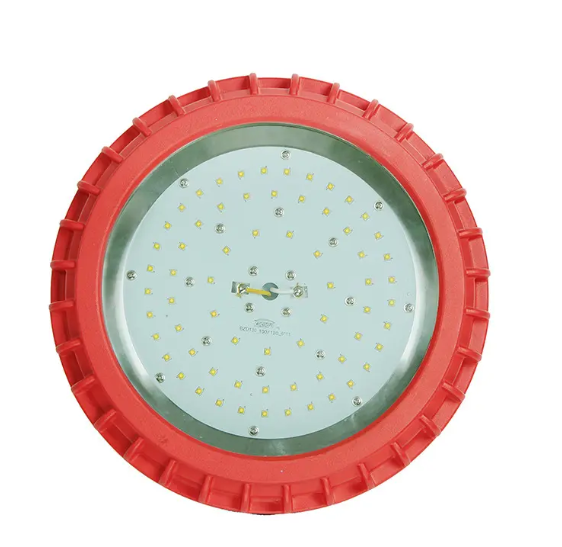
Choosing lighting for a hazardous industrial area requires more than comparing brightness, power consumption, or fixture design. When selecting an explosion proof LED fixture, buyers need to understand the Ex marking and check whether it matches the risks at the installation site.
Gas type, combustible dust, temperature limits, and zone classification all affect equipment selection. For engineering contractors and industrial purchasers, reviewing these details before ordering can reduce specification errors and avoid costly changes during installation.
What Information Does Ex Marking Provide

Ex marking identifies important protection information for electrical equipment intended for hazardous locations. Depending on the applicable certification system, it may indicate the protection method, gas or dust group, temperature classification, and equipment protection level. Buyers should review the complete marking rather than treat the letters “Ex” as sufficient proof of suitability.
Gas and dust hazards use different classification systems. Gas groups include IIA, IIB, and IIC, while combustible dust groups include IIIA, IIIB, and IIIC. Each group relates to specific hazard characteristics. The site’s hazardous-area assessment should identify the substances present before the purchasing team compares lighting products.
Zone classification also matters. Gas zones 1 and 2 describe locations where explosive gas atmospheres may occur under different conditions. Dust zones 21 and 22 apply to areas where combustible dust clouds may occur. The selected fixture must meet the requirements of the actual installation zone, as well as the relevant gas or dust classification.
How Should Buyers Match Hazard Groups
Gas group compatibility is a key selection factor. IIA, IIB, and IIC distinguish different gas-related hazards. Buyers should compare the product’s certified group with the gases identified in the site’s documentation. Equipment intended for one classification should not be assumed suitable for every other group without checking its approval.
Dust classification deserves the same attention. Group IIIA covers combustible flyings, IIIB covers non-conductive dust, and IIIC covers conductive dust. Conductive dust can create additional electrical risks if it enters equipment. Site assessments and product documentation help determine which classification applies to a particular installation.
Some facilities contain both gas and dust hazards. In these cases, procurement teams should verify each requirement separately. Approval for a gas atmosphere does not automatically establish suitability for combustible dust. Checking both classifications early can help reduce specification changes and delays between engineering approval and purchasing.
Temperature and Installation Conditions Matter
Surface temperature is another important part of Ex marking. Electrical equipment generates heat during operation, and its temperature classification must be appropriate for the substances present. Buyers should compare the certified temperature information with the site’s hazard assessment instead of relying on rated power alone.
Environmental conditions also affect the choice. Outdoor fixtures may face rain, dust accumulation, corrosion, vibration, and temperature changes. Indoor facilities can involve chemical exposure, frequent cleaning, or limited maintenance access. The project specification should describe these conditions so the enclosure, mounting method, and materials suit the intended location.
Installation details should be confirmed before procurement. Contractors need to check mounting orientation, cable entry arrangements, supply requirements, and access for maintenance. Even a fixture with suitable hazardous-area protection may not fit the project if its physical configuration conflicts with the electrical design.
Which Documents Should Be Checked Before Ordering
A product datasheet provides useful technical details, while the nameplate and applicable certification documents help verify the equipment’s approved use. Buyers should compare the model number, protection concept, gas or dust group, zone suitability, temperature classification, and certificate scope against the project specification.
When evaluating an explosion proof LED fixture, procurement teams should also check the standards and approval conditions required in the destination market. ATEX and IECEx are relevant frameworks for many industrial projects, but buyers should not assume that every model carries both certifications. The exact product variant and certificate need to be verified.
Consistency across quotations, drawings, technical submissions, and delivery records is equally important. A supplier may offer different configurations within one product series, and certification can depend on the specific model. Sunleem EEW is one company buyers may consider when reviewing hazardous-area lighting options, provided the proposed model’s documentation matches the project’s requirements.
Where Does the BZD130 Series Fit
The BZD130 Series Explosion-proof LED Lighting is specified for use in IIA, IIB, and IIC explosion-hazardous gas zones 1 and 2. For combustible dust applications, its stated suitability covers groups IIIA, IIIB, and IIIC in zones 21 and 22. These details provide a starting point for comparing the series with the site’s documented classifications.
The stated application range should still be checked against the complete product documentation. Buyers should verify the exact model, certified marking, operating conditions, and installation requirements before approving the fixture. Other specifications, including rated power, luminous output, colour temperature, ingress protection, and ambient temperature range, should come from the relevant datasheet rather than assumptions based on the series name.
When assessing a LED explosion proof light, engineering teams should also consider mounting height, fixture spacing, illumination levels, and maintenance access. These factors affect how the equipment performs within the wider lighting plan. Sunleem EEW offers the BZD130 Series as an option for hazardous-area applications, while the final selection depends on verified specifications and site conditions.
A Practical Basis for Lighting Selection
A suitable fixture must match the site’s documented hazards, zone classification, temperature requirements, and installation conditions. Ex marking provides a structured way to review these factors, but the full nameplate and supporting certification documents remain essential to the decision.
Before placing an order, engineering contractors and industrial buyers should compare the proposed equipment with hazardous-area drawings and project specifications. Any missing or inconsistent details should be clarified with the supplier. This process gives procurement teams a sound basis for evaluating lighting options and approving equipment for the intended application.
