
The rental and events market demands LED displays that combine visual quality, installation efficiency, and dependable performance across different venues. For distributors, selecting a manufacturing partner involves more than comparing prices or screen specifications. Product versatility, assembly design, technical support, and long-term business potential all influence whether a display solution can meet customers’ expectations. Evaluating these factors systematically helps distributors build a competitive portfolio and establish stronger relationships with event production companies.
Assess Product Versatility Across Event Types

Distributors typically serve clients with different requirements, from corporate conferences and exhibitions to concerts, product launches, and touring performances. A suitable manufacturer should offer display configurations that can accommodate varied screen sizes, venue layouts, and installation conditions. Versatility gives distributors more opportunities to serve different customer segments without sourcing an entirely separate solution for every project.
When evaluating an LED wall rental supplier, distributors should examine whether its products support indoor and outdoor applications, multiple cabinet sizes, and creative screen arrangements. These options can help rental companies adapt their inventory to different event formats and reduce the limitations of standardized configurations.
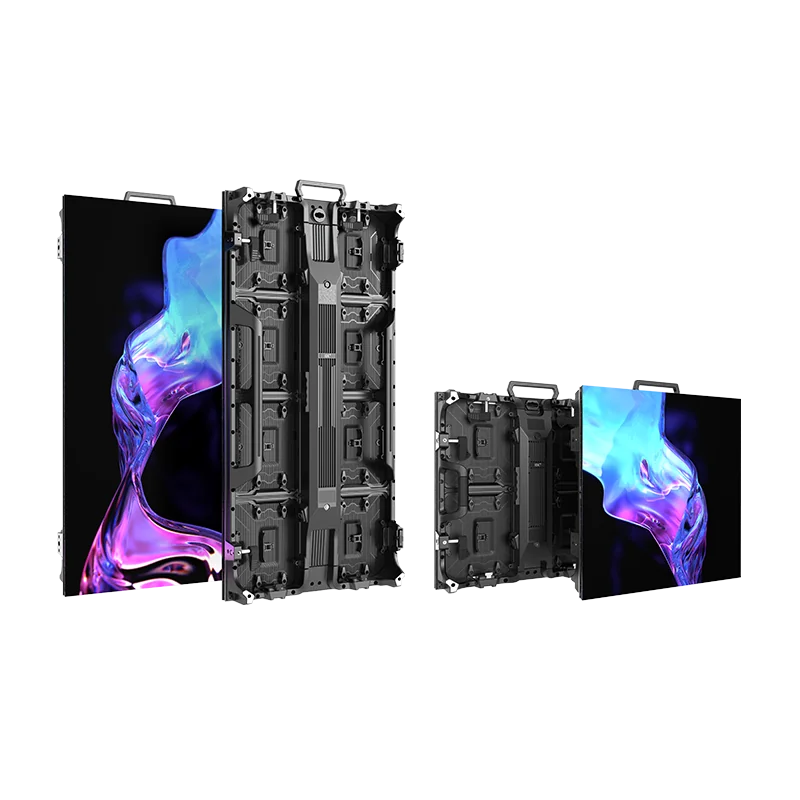
HDC’s X Series stage rental screen is designed for performances, events, and large conferences. Its product range includes indoor and outdoor configurations, with different pixel pitches and cabinet options. This flexibility can help distributors discuss solutions based on viewing distance, venue conditions, and visual requirements rather than relying on a single specification for every customer.
Examine Image Quality and Display Specifications
Visual performance is central to professional event production. Screens may display live camera feeds, presentations, animation, advertising, or detailed graphics, so image clarity and color reproduction affect the audience experience. Distributors should compare pixel pitch, brightness, refresh rate, grayscale performance, and viewing angle against the intended application.
Pixel pitch is particularly important. Smaller pixel pitches generally support finer detail at closer viewing distances, while larger pitches may suit screens viewed from farther away. Brightness requirements also differ between indoor venues and outdoor stages, where ambient light can significantly affect visibility.
Refresh rate deserves attention when displays will appear in camera footage. A sufficiently high refresh rate can help reduce visible flicker and scanning artifacts under suitable camera settings, although the final result also depends on camera shutter speed and system configuration.
The X Series emphasizes high-definition images and natural color reproduction. It list a refresh rate of at least 3,840 Hz. Indoor models specify white-balance brightness of 600–1,000 cd/m², while listed outdoor models reach 3,500–5,000 cd/m², depending on configuration. Distributors should match these specifications to each project rather than assuming all variants perform identically.
Prioritize Assembly Speed and Structural Flexibility
Installation time directly affects event labor costs and the number of projects a rental company can handle. Manufacturers should therefore be assessed on cabinet handling, connection mechanisms, alignment accuracy, maintenance access, and compatibility between components.
Distributors should also ask how products support curved or unconventional screen layouts. Flat walls may suit conferences and straightforward stage backdrops, while curved displays can create more immersive visual environments for exhibitions, brand activations, and live performances.
The X Series supports inner and outer arc assembly, with the manufacturer describing 12 arc designs and multiple angle options. Its listed cabinet formats include 500 × 500 mm and 500 × 1,000 mm, allowing compatible configurations to be combined. These design features can expand creative possibilities, but distributors should confirm the exact cabinet combinations and accessories needed for each layout.
Verify Durability and Maintenance Requirements
Rental displays are transported, assembled, dismantled, and stored repeatedly. Durability is therefore a commercial consideration, not merely a technical specification. Cabinet construction, connection stability, component accessibility, and protection against environmental exposure can influence maintenance costs and equipment availability.
For outdoor projects, distributors should verify the protection rating of the specific model. The X Series specifications list IP30 for indoor configurations and IP65 for outdoor configurations. These ratings are not interchangeable: the selected product must suit the actual exposure conditions, installation method, and relevant electrical safety requirements.
Maintenance arrangements deserve equal attention. Ask whether technicians can access modules and other serviceable components efficiently, whether spare parts are available, and what diagnostic guidance the manufacturer provides. A display that is easy to inspect and repair may help rental operators reduce downtime between bookings.
Before committing to a supplier, distributors should request warranty terms, recommended spare-parts inventories, and documented maintenance procedures. These details make it easier to estimate the total cost of ownership instead of judging a product solely by its initial purchase price.
Evaluate Manufacturer Support and Supply Capabilities
A strong manufacturing partner should support distributors beyond the initial transaction. Product training, technical documentation, troubleshooting assistance, spare-parts supply, and clear warranty policies all contribute to smoother project delivery. Distributors serving multiple markets should also assess communication efficiency, production capacity, and shipping arrangements.
Customization is another consideration. Some clients need nonstandard screen shapes, particular dimensions, or configurations that fit specific stage designs. Manufacturers with research and development capabilities may be better positioned to discuss these requirements, although distributors should verify feasibility, lead times, and additional costs before making commitments to customers.
HDC is a high-tech enterprise integrating research and development, manufacturing, sales, and service for creative and commercial LED displays. It describes OEM and ODM services, custom design, production capabilities, quality assurance, and global logistics. These capabilities give distributors a basis for discussing customized projects and supply arrangements directly with the company.
Compare Total Cost and Long-Term Business Value
Purchase price matters, but it should not be the only deciding factor. Distributors need to consider freight, installation accessories, maintenance, spare modules, expected utilization, warranty coverage, and the cost of downtime. A lower initial quotation may offer less value if servicing is difficult or a configuration cannot meet customers’ requirements.
Request comparable quotations for the same screen size, pixel pitch, brightness level, protection rating, and accessory package. Ask manufacturers to clarify which specifications are standard and which require optional components. Reviewing sample units, testing image performance, and checking references from relevant projects can further reduce purchasing uncertainty.
For an LED wall rental business, the best choice is the product portfolio that balances visual quality, installation efficiency, reliability, and realistic operating costs. Distributors should evaluate these factors against their own customer base and expected project mix before placing large orders.
Building a Reliable Manufacturer Partnership
Choosing an LED display manufacturer requires a structured assessment of product versatility, image performance, assembly design, durability, technical support, and commercial terms. Each factor affects how effectively distributors can serve event organizers and rental companies.
HDC‘s X Series offers a range of indoor and outdoor configurations, high-definition display performance, and curved assembly options for stage and event applications. Distributors can use these features as a starting point for evaluating product suitability, then verify detailed specifications, service commitments, and quotations with the manufacturer. A well-informed selection process supports stronger customer relationships and more sustainable business growth.
