
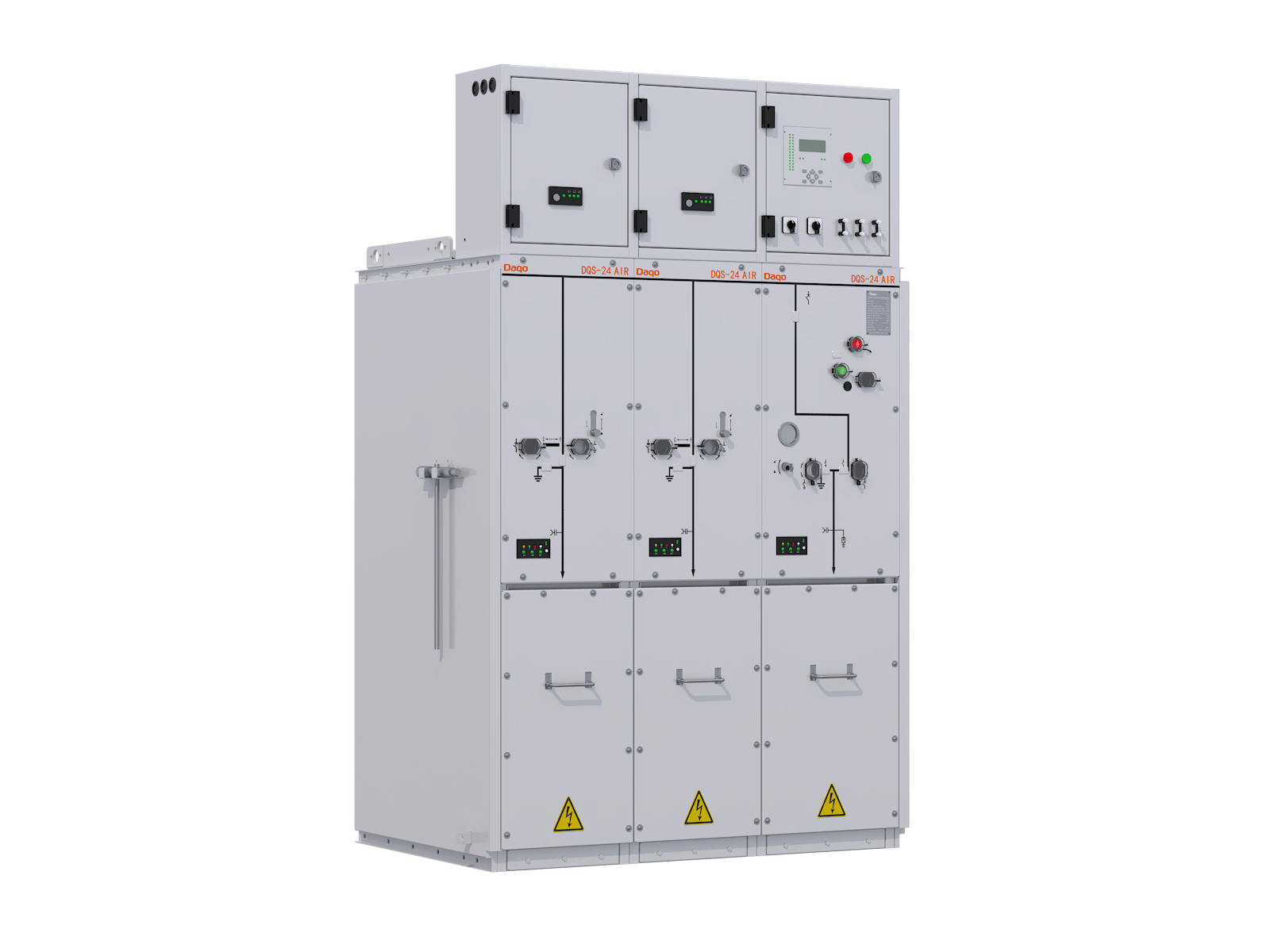
Industrial facilities rely on stable electrical power distribution to maintain manufacturing operations, safeguard capital machinery, and ensure worker safety. Choosing an experienced medium voltage switchgear company represents a critical engineering decision during facility design, expansion, or infrastructure modernization projects worldwide.
Medium-voltage switchgear acts as the primary control and protection hub within an industrial electrical network. Managing distribution voltages from three kilovolts to forty kilovolts, this equipment isolates faults and regulates energy flow. Proper specification helps reduce the risk of major power outages during industrial operation.

Partnering with an experienced manufacturer like Daqo Group enables engineering teams to match hardware specifications directly against prospective short-circuit levels. Key technical metrics include continuous current ratings, short-time withstand capacities, and peak impulse voltage limits necessary for site stability.
A reliable manufacturing partner provides custom busbar configurations, flexible cable entry options, and protective relay integration. These tailored electrical assemblies align with site single-line diagrams to protect valuable power transformers and maintain operational productivity across demanding industrial sectors.
Evaluating Structural Enclosure Designs and Safety
Industrial facility designs evaluate switchgear based on internal physical compartmentalization, which directly impacts operator safety and service accessibility during maintenance routines. Metal-clad switchgear features complete physical separation between internal functional compartments using grounded metallic barriers to help contain electrical faults within designated compartments.
This structural segregation prevents an internal arc fault from propagating into adjacent compartment sections. Main vacuum circuit breakers in metal-clad systems utilize draw-out designs, allowing technicians to rack out breakers following the applicable operating and safety procedures.
Conversely, metal-enclosed switchgear houses switching devices and busbars within a single metallic structure without full internal metallic barriers between sub-components. While offering a compact physical footprint, maintenance procedures often require broader de-energization across the connected electrical power distribution network.
An experienced medium voltage switchgear company evaluates site spatial limitations, maintenance protocols, and budget parameters to recommend optimal enclosure topologies. Selecting appropriate configurations balances initial capital expenditure with long-term operational flexibility, maintainability, and safety across the plant lifecycle.
Insulation Mediums and Environmental Adaptation
The dielectric medium surrounding active conductors determines enclosure dimensions, maintenance intervals, and environmental durability. Air-insulated switchgear relies on atmospheric air and insulating barriers, providing a cost-effective choice for clean indoor environments where physical footprint limits are less restrictive for installation.
However, airborne dust and humidity may increase inspection and maintenance requirements over time. Facilities in harsh locations require robust alternative technologies that protect delicate internal mechanisms from severe atmospheric contamination.
Gas-insulated systems house primary live components inside hermetically sealed stainless steel tanks filled with pressurized dielectric gas. Equipment portfolios from Daqo Group include compact gas-insulated solutions suitable for space-constrained or demanding environments.
Consulting an experienced medium voltage switchgear company helps project engineers select between air, gas, and solid insulation technologies. Solid-insulated switchgear encapsulates conductors directly in epoxy resin, eliminating pressurized gas handling while delivering reliable protection against harsh environmental exposure.
Thermal Dissipation and Fault Withstand Capabilities
Switchgear assemblies must withstand severe mechanical forces and rapid thermal spikes generated during maximum prospective fault currents. Nameplate ratings specify short-time withstand currents alongside peak impulse capabilities, which must exceed calculated site fault levels to prevent structural destruction during short-circuit incidents.
Internal arc faults release massive thermal energy and high pressure waves within milliseconds. Switchgear certified under internal arc classification standards directs explosive gases and thermal pressure away from operating personnel via integrated relief ducts, safeguarding technicians working within the substation perimeter.
Continuous full-load operation generates considerable heat across busbar connections, circuit breaker contact surfaces, and cable terminations. Inadequate thermal dissipation leads to insulation degradation and accelerated contact oxidation, increasing the risk of unexpected equipment failure during long continuous operating cycles.
Established manufacturers incorporate thermal management features and appropriate conductor designs to support reliable operation. Proper thermal design ensures equipment longevity and maintains electrical conductivity across heavy-duty industrial power distribution systems.
Integration of Digital Automation and Monitoring
Modern industrial facilities demand continuous health monitoring, automated network switching, and digital integration. Digital switchgear architectures support modern communication and monitoring technologies for intelligent power distribution.
Non-conventional instrument transformers, such as Rogowski coils and electronic voltage sensors, deliver highly linear measurement signals across broad operating ranges. Wireless thermal sensors installed directly on critical busbar joints detect localized hot spots before thermal runaway causes catastrophic component breakdown.
Advanced switchgear portfolios from Daqo Group incorporate intelligent protection relays, electronic metering devices, and automated motor-operated draw-out mechanisms. These digital features enable remote operation, significantly reducing human exposure to high-energy electrical compartments during routine switching operations and testing routines.
Ensuring long-term system reliability requires selecting a manufacturer with rigorous quality control standards and full compliance with international engineering standards. Factory acceptance testing verifies that every manufactured panel meets exact design specifications, ensuring safe power distribution across critical industrial projects.
