
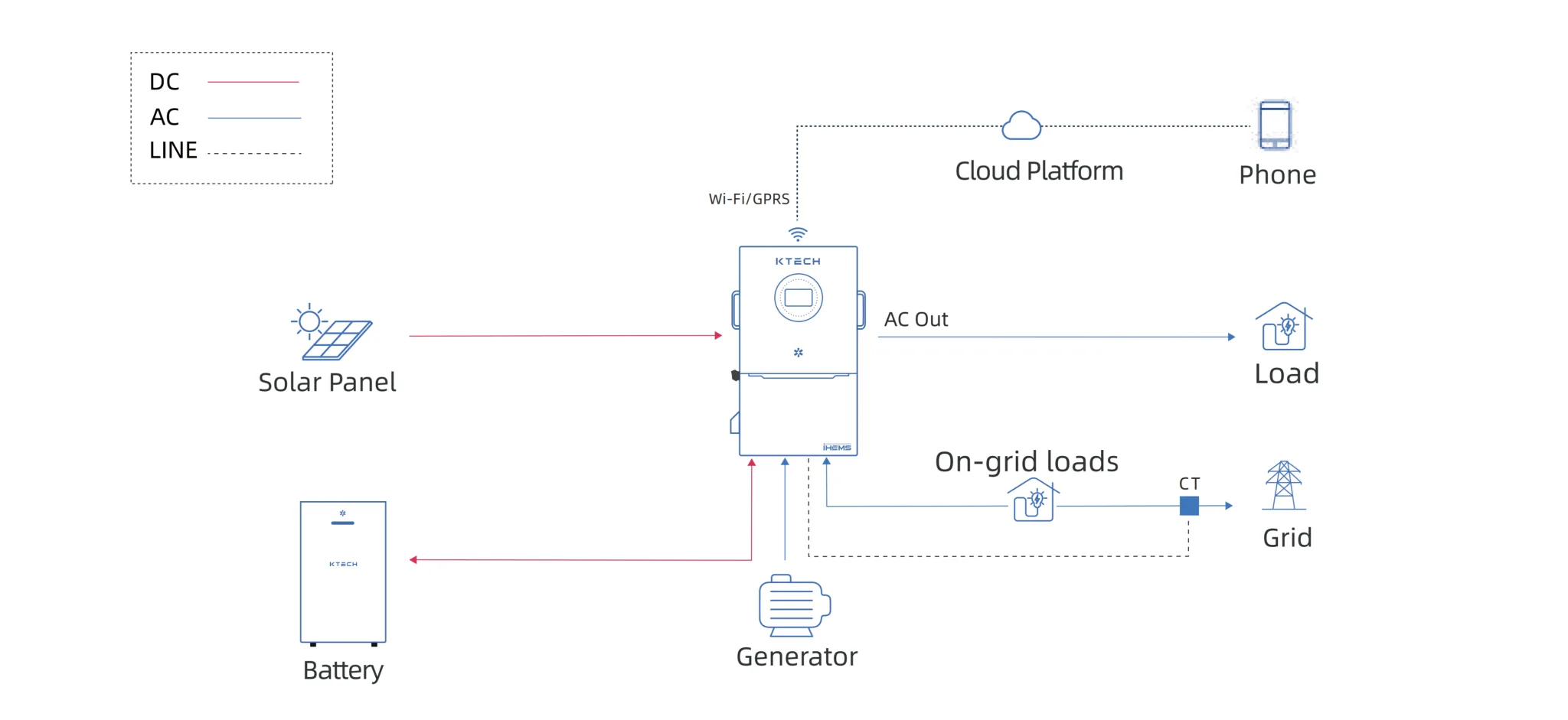
Navigating the transition toward residential clean power involves understanding how modern energy hardware captures, stores, and distributes daily electricity. Installing a modern home solar energy system empowers property owners to reduce utility dependency, manage dynamic consumption needs, and maintain continuous household power during unexpected grid failures.
Supporting this global energy transition, Ktech designs robust energy management technologies and manufactured hardware solutions tailored for residential and small commercial applications. Backed by self-developed system architectures and flexible customization options, the manufacturer equips international distributors and system integrators with reliable, long-lasting hardware supported by comprehensive technical training and responsive service networks.

Assessing Household Electrical Demand and Load Profiles
Determining baseline electricity needs forms the essential foundation for designing any residential photovoltaic deployment. Reviewing historical utility bills helps identify average daily kilowatt-hour usage, seasonal peak spikes, and essential appliance power draws.
Evaluating these consumption patterns prevents under-sizing storage banks or selecting inadequate inverter capacities. System planners utilize load profile analyses to ensure solar generation matches daily household requirements efficiently.
Evaluating Site Suitability and Solar Irradiance Potential
Property orientation, roof tilt angles, and localized shading patterns directly dictate how much solar radiation photovoltaic arrays can harvest daily. Identifying potential shading obstacles like surrounding trees or adjacent structures prevents long-term system underperformance.
Professional site assessments analyze regional solar irradiance metrics to project average daily output. Ensuring structural roof integrity alongside optimal panel placement optimizes long-term energy generation potential.
Understanding Primary Component Roles in Residential Solar Setups
A complete solar system consists of several interconnected hardware elements working in tandem to convert sunlight into usable alternating current electricity. Photovoltaic modules capture raw solar radiation, while battery banks store excess generated energy for later use.
Central to this architecture, hybrid power units manage directional power flows between solar panels, battery storage, and active household circuits. Coordinating these hardware components maintains smooth energy distribution across changing load conditions.
Balancing Grid-Tied Efficiency and Standalone Power Backup
Residential properties located in rural or remote regions frequently experience unstable grid power supply and unexpected blackout events. Combining grid connectivity with standalone backup capabilities offers both economic efficiency and emergency power resilience.
Modern hybrid systems fulfill daily household electricity demands while maintaining seamless emergency backup readiness. Automatic transfer mechanisms switch operating modes during blackouts, keeping critical lighting, refrigeration, and medical devices powered without manual intervention.
Optimizing Surplus Energy Management and Grid Export Dynamics
Generating excess solar energy during peak afternoon hours creates opportunities to optimize household energy economics. Feeding surplus power back into the utility grid under localized net-metering programs provides financial credits or additional revenue streams.
Intelligent energy distribution mechanisms prioritize local consumption and battery charging before exporting excess power. Balancing self-consumption with grid export dynamics optimizes overall system return on investment.
Supporting Small Commercial and Rural Agriculture Applications
Small farms, boutique homestays, and regional commercial operations require versatile energy solutions that balance daily operating costs with backup reliability. Uninterrupted power flow is vital for running agricultural pumps, refrigeration units, and guest amenities.
Deploying a Hybrid Photovoltaic Energy Storage Solution allows small commercial enterprises to lower operational utility expenses effectively. Combining self-consumed solar power with off-grid emergency backup maintains seamless business continuity during utility grid interruptions.
Integrating Battery Technologies for Long-Term Energy Security
Selecting an appropriate battery chemistry determines how effectively excess solar generation can be stored for nighttime usage. Modern lithium-based storage systems deliver high energy density, long cycle life, and deep depth-of-discharge capabilities.
Matching battery storage capacity with average overnight electrical loads helps reliable power availability. Proper battery management preserves storage health over thousands of charge and discharge cycles.
Implementing Safety Protocols and Structural Compliance
Installing residential photovoltaic hardware requires adhering to strict regional electrical codes, structural weight standards, and safety regulations. Integrating proper grounding, surge protection, and circuit isolation mechanisms safeguards property assets from electrical hazards.
Professional installers implement standardized safety protocols to protect system hardware against thermal events, rapid voltage spikes, and weather-related strain. Compliance with local installation guidelines maintains long-term system durability and operational safety.
Maintaining Performance Management Through Digital Telemetry
Monitoring system performance continuously helps homeowners track daily energy generation, monitor storage capacity, and identify potential maintenance needs early. Digital cloud platforms present real-time system metrics through intuitive user dashboards.
Integrating system diagnostic platforms developed by Ktech Solar provides technical teams and system operators with clear operational visibility. Remote diagnostics streamline preventive maintenance, keeping conversion efficiency high across years of continuous operation.
Conclusion
Building a dependable residential solar power system requires combining accurate load planning, durable hardware components, and responsive energy monitoring platforms. Well-designed installations transform natural sunlight into reliable, clean electricity while protecting households against unexpected utility grid disruptions.
Collaborating with Ktech provides global distributors, installer networks, and system integrators with flexible product customization, proprietary technology designs, and dedicated technical support. Energy professionals looking to implement a reliable home solar energy system are encouraged to submit inquiries and explore long-term distribution partnerships today.
