
Drone technology has evolved far beyond simple aerial imaging. With the integration of artificial intelligence, modern unmanned aerial vehicles (UAVs) can now analyze environments, identify targets, and support real-time decision-making during missions. Among these advancements, drone object detection has become a critical capability for industries and organizations requiring faster situational awareness and more accurate aerial intelligence.
Traditional drone operations often depend on collecting data first and processing it afterward, which can delay responses in time-sensitive scenarios. Modern onboard AI models change this workflow by enabling UAVs to process information directly during flight. Icecypress Technology, a spatial intelligence AI company specializing in 3D and AI technologies, develops intelligent aerial solutions that combine AI computing, drone reconnaissance, and real-time spatial analysis to improve operational efficiency.

Understanding How Drone Object Detection Works with Onboard AI
Drone object detection refers to the ability of UAV systems to automatically identify and locate specific objects or targets from aerial images and video streams. This process relies on AI models that analyze visual information captured by onboard cameras and sensors.
Modern onboard AI models typically use deep learning algorithms trained on large datasets. These models learn the visual characteristics of different objects, allowing drones to recognize targets even in complex environments. During flight, the onboard computing system processes camera data, detects potential objects, and provides location information without requiring constant dependence on external processing systems.
This approach is especially valuable for reconnaissance, inspection, surveying, and monitoring applications where immediate information is essential. By reducing data transmission delays, onboard AI enables faster responses and more efficient mission execution.
The Role of Real Time Object Tracking in Intelligent UAV Operations
Real time object tracking is another important capability that extends drone intelligence beyond simple detection. While object detection identifies targets within individual frames, tracking technology continuously follows movement patterns and maintains target information over time.
For reconnaissance missions, real time object tracking allows UAV platforms to monitor dynamic targets and provide continuous situational updates. AI algorithms analyze changes in position, movement speed, and visual characteristics to maintain tracking accuracy during flight.
Combining drone object detection with real time object tracking creates a more complete aerial intelligence system. The UAV can not only identify objects but also understand their movement and behavior, supporting more informed operational decisions.
Hunter Wing: A Man-Portable UAV Solution for Advanced Reconnaissance
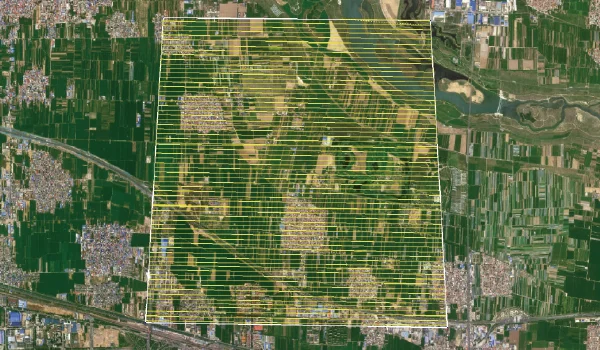
Icecypress Technology’s Hunter Wing represents a new generation of man-portable UAV solutions designed for drone reconnaissance and recognition missions. The platform integrates intelligent computing capabilities with UAV operations to deliver real-time orthomosaic drone mapping, ultra-fast drone object detection, and accurate target positioning.
Designed for single-operator deployment, Hunter Wing provides a lightweight and flexible solution for complex environments. It supports missions where portability, speed, and independent operation are important, including terrain monitoring, surveying, and reconnaissance applications.
By combining AI processing with UAV mobility, Hunter Wing transforms a traditional aerial platform into a real-time reconnaissance UAV system capable of generating valuable intelligence during flight.
Lightweight Design Enables Flexible Man-Portable UAV Deployment
One of the key challenges in UAV intelligence systems is balancing computing capability with portability. Advanced AI processing often requires additional hardware, which can increase system weight and reduce operational flexibility.
Hunter Wing addresses this challenge through an ultra-lightweight design. Its additional components, including the intelligent computing module and power supply, weigh less than 600g. This compact configuration allows operators to carry and deploy the system in challenging environments such as mountains and reservoirs.
For field teams, lightweight equipment optimizes transportation efficiency while maintaining the intelligent capabilities required for modern reconnaissance missions. The result is a practical man-portable UAV solution that supports rapid deployment without unnecessary complexity.
High Compatibility Simplifies UAV Integration and Operation
Operational efficiency depends not only on technology performance but also on ease of deployment. A complex setup process can limit the effectiveness of advanced UAV systems in real-world scenarios.
Hunter Wing is designed with high compatibility for multiple series of DJI industrial UAV platforms. Operators can connect the remote controller to the Hunter Wing Box and complete deployment through a simple three-step process: power on, connect, and set flight routes.
This streamlined operation reduces preparation time and allows teams to focus on mission objectives rather than complicated equipment configurations. Such compatibility makes intelligent UAV solutions more accessible for professional applications.
Low Power Consumption Supports Long-Duration Missions
Extended flight operations require efficient energy management, especially for reconnaissance and monitoring tasks that demand continuous data processing. High-performance AI systems must balance computing power with power consumption.
Hunter Wing’s intelligent computing module consumes less than 25W. Combined with a 24V 2000mAh mobile power source, the system can support up to four hours of continuous operation.
This endurance capability makes it suitable for long-duration missions such as patrol, surveying, and environmental monitoring. Operators can conduct extended operations while maintaining real-time AI analysis throughout the mission.
End-to-End Real-Time Processing Improves Decision Efficiency
The biggest advantage of onboard AI is the ability to process information throughout the entire flight process. Instead of waiting for data collection and post-processing, operators can receive analysis results immediately.
Hunter Wing provides full real-time mapping, drone recognition, and positioning during flight. Data streams continuously back to the ground station, allowing teams to access complete results as soon as the mission ends.
This end-to-end processing capability optimizes decision-making speed and reduces operational delays. For industries requiring rapid responses, real-time intelligence can significantly enhance mission effectiveness.
Advancing UAV Intelligence Through AI-Powered Spatial Solutions
As UAV applications continue expanding, artificial intelligence will become increasingly important in transforming drones from data collection tools into intelligent operational platforms. Drone object detection, real time object tracking, and onboard AI processing are creating new possibilities for faster and more accurate aerial analysis.
Icecypress Technology demonstrates how spatial intelligence and AI can enhance modern UAV capabilities. Through solutions such as Hunter Wing, the company combines lightweight hardware, intelligent computing, and real-time analysis to support advanced reconnaissance and monitoring scenarios. These innovations provide organizations with more efficient ways to understand environments, improve decision-making, and build smarter aerial intelligence systems.
