
Marine electrical systems need careful planning because power equipment often operates in limited spaces with long cable routes. Voltage drop is a common issue on boats, especially when low-voltage devices draw current over extended distances. Understanding cable sizing helps maintain stable operation and reduces unnecessary power loss.
When selecting a DC marine air conditioner, operators need to consider cable length, current demand, and system voltage. Proper cable selection supports reliable performance and helps avoid problems caused by insufficient power delivery in marine environments.
Why Voltage Drop Matters in Marine Electrical Systems

Voltage drop happens when electrical resistance in a cable reduces the voltage reaching a device. This issue becomes more noticeable in 12V systems because they operate with lower voltage levels compared with higher-voltage power systems. A small voltage loss can affect equipment performance.
For marine applications, cables may run from batteries or distribution panels to equipment installed in cabins or engine areas. Longer distances increase resistance, which means the cable must be selected according to the actual installation conditions.
Key Factors for DC Marine Air Conditioner Cable Selection
Cable sizing depends on several factors, including current load, cable length, and acceptable voltage loss. A cable that is too small may create excessive heat and reduce the efficiency of connected equipment. A suitable cable size helps deliver stable power.
For a DC marine air conditioner, the rated current should be calculated before choosing the cable. Installers usually check the manufacturer’s electrical specifications and consider whether the system will operate continuously or only during short periods.
Calculating Cable Size Based on Power Requirements
The basic relationship between power, voltage, and current helps determine cable requirements. In a 12V system, equipment with higher power consumption requires more current than similar equipment running at higher voltages.
For example, a cooling system with a higher BTU rating may require thicker cables when connected to a 12V battery system. The longer the cable distance between the power source and the unit, the larger the conductor size may need to be to reduce voltage loss.
Practical Installation Tips for 12V Marine Equipment
Marine environments create additional challenges because cables are exposed to vibration, moisture, and temperature changes. Using marine-grade cables with suitable insulation helps improve durability. Connections should also be properly protected against corrosion.
When installing a DC marine air conditioner, professionals often place the power source as close as practical to the equipment. Shorter cable routes reduce resistance and help maintain more stable voltage during operation.
Understanding Product Design for Marine Cooling Applications
Different vessels have different power structures, so flexible equipment design can provide more installation options. Some marine cooling systems are developed to work with various electrical configurations and support different vessel layouts.
Our products are designed to accommodate practical onboard installation requirements, including cable routing and limited installation space.
MAR-220V/09BP Variable Frequency Marine Air Conditioner Features
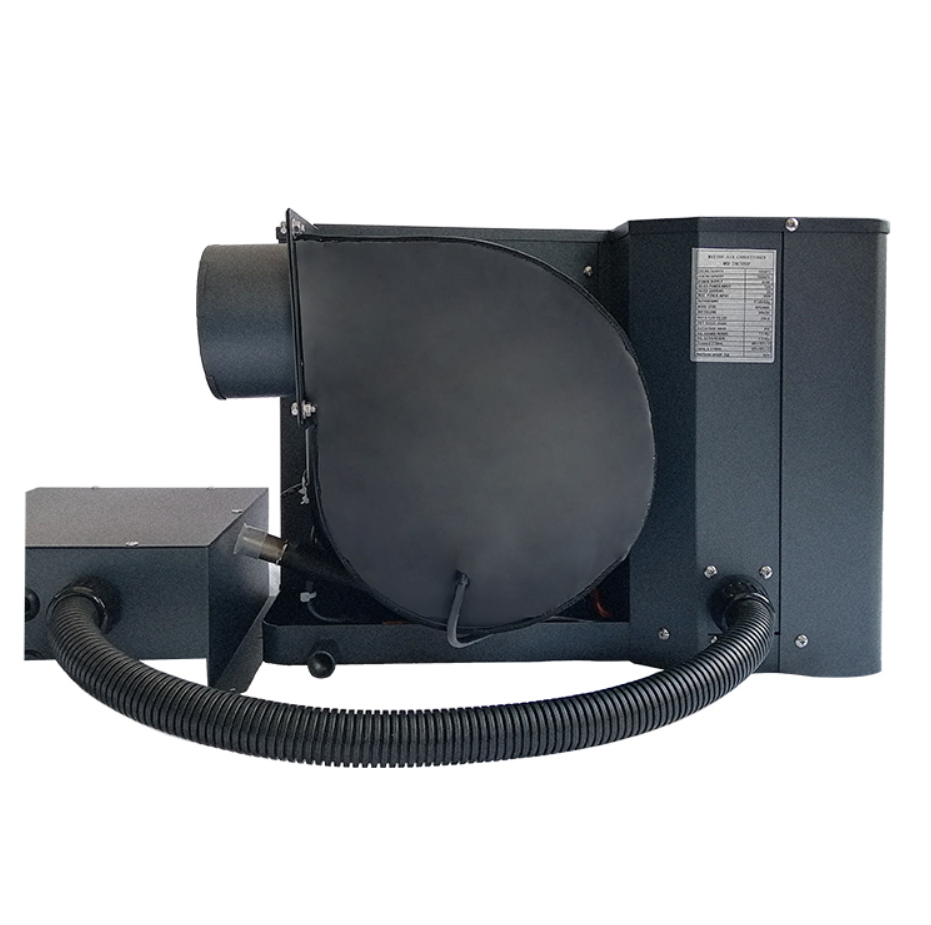
Some modern marine air conditioners are no longer limited to a single power source. For example, The Marine Air Conditioner 9,000 BTU 220V AC Cooling & Heating (MAR-220V/09BP) is designed for marine cooling and heating applications. The MAR-220V/09BP provides a 9,000 BTU cooling capacity and 10,450 heating capacity and uses variable frequency technology for flexible operation.
The MAR-220V/09BP Variable Frequency Marine Air Conditioner supports both AC and DC power sources, allowing compatibility with different vessel power systems. It also features an IPX4 waterproof rating, anti-shock grade I protection, and an energy-efficient design for marine environments.
How Cable Planning Supports System Performance
Good cable planning is an important part of marine equipment installation. Even when a cooling unit has efficient internal technology, unstable voltage supply may influence its operation. Correct cable sizing helps maintain the expected electrical conditions.
For vessels using a DC marine air conditioner, checking cable specifications before installation can prevent common electrical issues. Factors such as battery capacity, cable routing, and operating conditions should be reviewed together.
Reducing Maintenance Risks Through Proper Electrical Design
A well-designed electrical system can reduce maintenance requirements. Oversized or undersized cables may create unnecessary costs or operational concerns. The goal is to select a cable that matches the actual load and installation environment.
Marine technicians should also inspect cable connections regularly. Loose terminals, damaged insulation, or corrosion can increase resistance and contribute to voltage drop over time.
Supporting Reliable Marine Climate Control Solutions
Vessel air conditioning systems require cooperation between equipment design and electrical planning. From cable selection to installation methods, each detail affects overall system operation.
With experience in maritime climate solutions, ZhuoliMarine develops products for different vessel applications and provides technical support for maritime customers. Their solutions combine practical design with features suitable for onboard environments.
Choosing the correct cable size is an important step when installing a DC vessel air conditioner on a vessel. Proper electrical planning helps maintain stable power delivery and supports comfortable onboard conditions. They focus on maritime air conditioning solutions with adaptable designs, reliable performance, and application-based support. Contact ZhuoliMarine to explore suitable maritime climate control options for different vessel requirements.
