
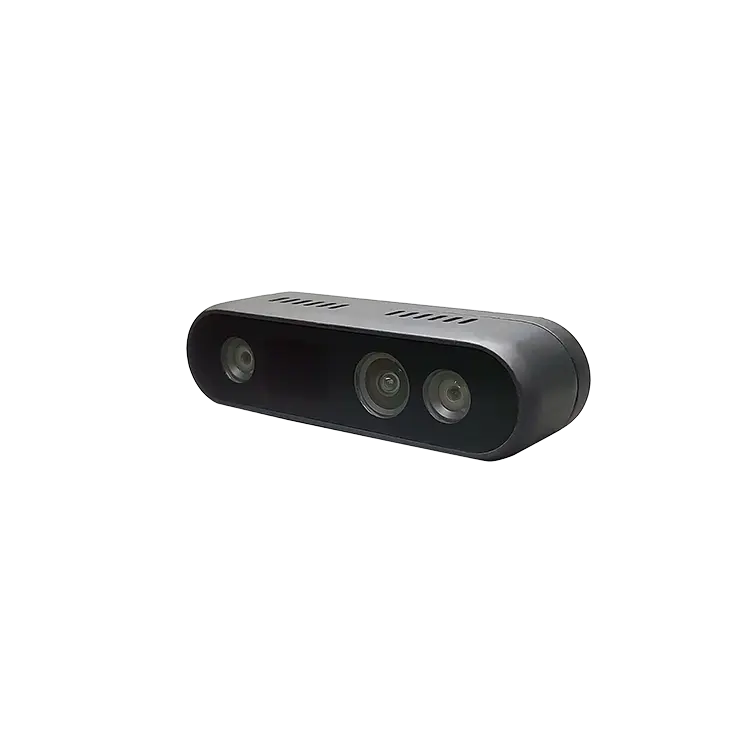
In modern robotics, sensing the environment accurately is essential for safe and efficient operation. A key component that enables this capability is the perception sensor. It supports real-time environmental understanding and is closely connected to technologies such as autonomous navigation in intelligent machines. Within solutions developed by Archimedes Innovation, perception sensing plays a central role in enabling machines to interpret surroundings and respond appropriately.
Understanding Perception Sensors
A perception sensor is a device designed to collect environmental data and transform it into actionable information for robotic systems. Unlike basic measurement tools, it focuses on recognizing objects, detecting obstacles, and interpreting spatial conditions around a machine.
According to Archimedes Innovation, perception sensors use technologies such as optical imaging, electromagnetic wave detection, and advanced measurement techniques to identify target characteristics and environmental features. This allows autonomous systems to move beyond simple positioning and toward environmental awareness and decision support.

In robotics, perception sensors are typically integrated into sensor fusion systems where multiple data sources work together to improve accuracy and reliability.
Role in Autonomous Systems and Robotics
Perception sensors act as the “environmental awareness layer” in autonomous systems. They provide input that allows machines to understand what is happening around them in real time.
In autonomous systems, autonomous navigation depends heavily on perception data. The system must detect obstacles, estimate distances, classify objects, and continuously update its internal map of the environment. Without reliable perception input, navigation decisions would be incomplete or unsafe.
These sensors are commonly used in applications such as autonomous vehicles, agricultural robotics, industrial automation, and unmanned platforms. They help systems adapt to changing environments, including low visibility, dynamic obstacles, and complex terrain conditions.
Connection Between Perception Sensor and Autonomous Navigation
The relationship between perception sensors and autonomous navigation is direct and functional. Perception sensors provide raw environmental data, while navigation systems interpret this data to plan movement.
In a typical workflow, sensors capture surroundings, the system processes the data to identify obstacles and pathways, and then the navigation algorithm determines the safest or most efficient route. This continuous loop allows autonomous systems to operate without human intervention.
Technologies integrated within Archimedes Innovation systems combine perception sensing with positioning and control modules, forming a complete autonomy stack that supports real-time decision-making in robotics.
Conclusion
A perception sensor is a fundamental building block in autonomous systems and robotics. It enables machines to detect, understand, and interpret their environment with precision. By supplying critical environmental data, it directly supports autonomous navigation and intelligent decision-making. Companies such as Archimedes Innovation integrate these sensors into advanced systems to enhance robotic awareness and operational reliability across diverse applications.
