
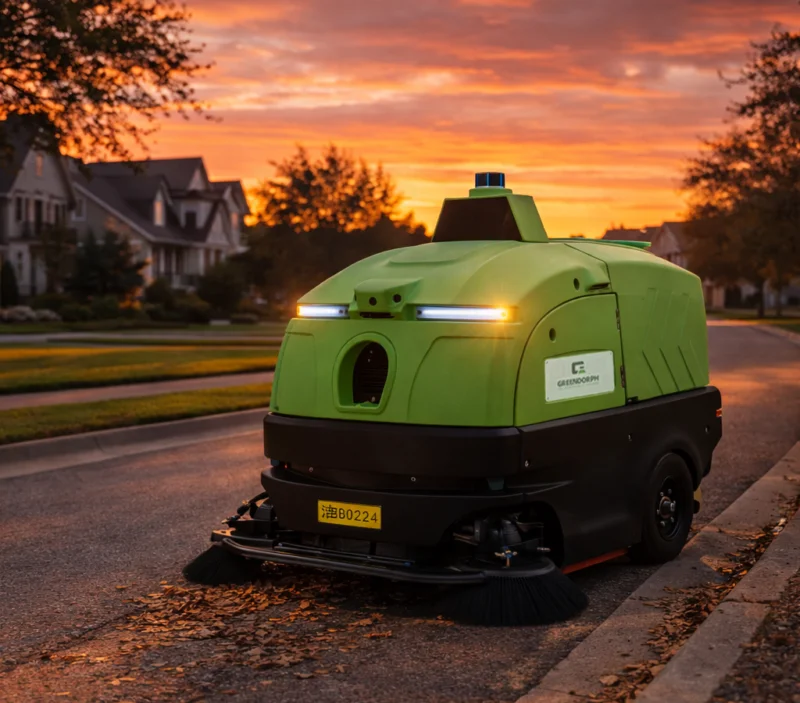
When evaluating a modern robot floor cleaner, the most critical feature to consider is the sophistication of its autonomous navigation and environmental perception. High-end industrial units, such as those developed by Greendorph, utilize a full-stack R&D approach that integrates LiDAR, ultrasonic sensors, and high-definition cameras to provide 360-degree environmental awareness. This allows the machine to perform flexible obstacle avoidance, ensuring it can safely navigate complex, high-traffic environments like transportation hubs or busy warehouse aisles without human intervention. Reliability in these systems is further enhanced by AI-driven path planning, which allows the robot to calculate the most efficient cleaning route, reducing repetitive coverage and energy consumption. For facilities looking to minimize operational risks, choosing a robot with a proven “zero-edge cleaning” capability is essential for maintaining hygiene along walls and curbs where traditional machines often struggle.
Maximizing Cleaning Efficiency with Multi-Functional Systems
A truly effective robot floor cleaner should offer more than just basic sweeping; it must provide a multi-stage cleaning process that adapts to different debris types and floor surfaces. Leading models like the YJ130 and YJ80 are engineered with primary cleaning systems enhanced by auxiliary functions such as suction, airflow-assist, and atomized misting spray. According to the Greendorph product specifications, these machines achieve a cleaning efficiency of over 95%, capable of covering up to 5,760 square meters per hour. This high level of productivity is supported by powerful 3000W motors that can effortlessly handle everything from fine dust and cigarette butts to larger industrial waste. By consolidating multiple cleaning steps into a single autonomous pass, businesses can significantly reduce the time required for facility maintenance while ensuring a uniform level of cleanliness that manual labor often fails to replicate.
Optimizing Battery Life and Operational Endurance

For large-scale industrial or outdoor applications, the battery technology and runtime of robotic floor cleaners are paramount. A reliable machine must be capable of completing a full cleaning shift on a single charge to avoid the productivity losses associated with frequent recharging cycles. Professional units are typically equipped with high-capacity 48V/200 AH Lithium (LFP) batteries, which provide an average continuous operating time of six to eight hours. As highlighted on the Greendorph official website, these 100% electric systems represent a “cleaning revolution” by offering zero CO2 emissions and near-silent operation, making them ideal for both nighttime warehouse cleaning and daytime use in noise-sensitive residential areas. Furthermore, features such as auto-charging and intelligent power management allow the robots to return to their stations independently, ensuring they are always ready for the next scheduled task without requiring constant staff oversight.
Streamlining Maintenance with Intelligent Management
The long-term value of a robot floor cleaner is often determined by how easily it can be maintained and managed by the existing workforce. Modern robotic systems should feature intelligent management tools, including cloud-based platforms and mobile apps that provide real-time cleaning data analytics and remote operation capabilities. These tools allow facility managers to monitor the exact square footage cleaned, battery health, and even receive “garbage overflow” alerts when the hopper needs emptying. To further reduce the manual workload, advanced models like the YJ130 incorporate automatic garbage dumping and self-cleaning functions. A reliable supplier like Greendorph supports these features with a robust global service network, offering 24/7 technical assistance and specialized training to ensure that the transition to robotic cleaning is seamless and that the equipment remains at peak performance throughout its lifecycle.
Ensuring Versatility Across Diverse Floor Types
Another essential feature of top-tier robotic floor cleaners is their ability to perform across a wide variety of indoor and outdoor surfaces without losing traction or cleaning power. Whether the facility features epoxy floors, cement, asphalt, or even cobblestone and small square bricks, the robot must have the mechanical agility to adapt. This versatility is often achieved through dual-wheel differential drives and quad-independent suspension systems that allow the machine to maintain stability on uneven ground and climb slopes of up to 10 or 15 degrees. Choosing a supplier that offers a diverse lineup—ranging from high-capacity street vacuums to compact warehouse scrubbers—ensures that you can match the specific robot to the job at hand.
Future-Proofing with Sustainable and Scalable Technology
In the current landscape of 2026, sustainability has become a non-negotiable factor in procurement decisions. A reliable robot floor cleaner should be designed with its full lifecycle in mind, prioritizing 100% battery reuse and zero-emission operation to align with global ESG standards. Suppliers that focus on “green durability” ensure that their machines are built with high-quality, recyclable materials that withstand the rigors of industrial use while minimizing the carbon footprint of the facility. Additionally, the software driving these robots should be scalable, allowing for over-the-air updates that improve AI navigation and cleaning algorithms over time. By investing in technology that evolves alongside your business, you can ensure that your cleaning fleet remains at the cutting edge of efficiency, helping to solve labor shortage crises while maintaining the highest possible standards of urban and industrial hygiene.
Selecting the Right Global Partner for Success
A reliable supplier provides comprehensive support that includes pre-sale deployment planning, hierarchical training for cleaning operators, and a guaranteed warranty—typically one year for major components. Greendorph exemplifies this by maintaining a highly experienced network of authorized dealers who provide localized support and rapid repairs, ensuring that downtime is kept to an absolute minimum. When a supplier can demonstrate a track record of successful deployments in various international hubs, it serves as a testament to the reliability and safety of their AI systems. By selecting a partner that understands the nuances of human-robot collaboration, businesses can empower their cleaning staff to transition from manual laborers to fleet commanders, ultimately safeguarding both the facility’s cleanliness and the dignity of the workforce.
