
Buying an Aquarium LED Light should start with the aquarium itself rather than the fixture’s appearance or a long list of specifications. Tank dimensions, livestock, plants, installation space, control preferences, and operating costs all affect which lighting solution makes sense. A small freshwater aquarium has very different requirements from a deep planted tank or a specialized reptile enclosure, so buyers can save time by defining the application before comparing models. HiTauing offers lighting configurations that can be assessed according to these practical requirements.

Start With Tank Size And Purpose
Tank dimensions provide the first useful reference point because a fixture needs to distribute light across the intended viewing area. A narrow aquarium may work well with a compact lamp, whereas a wider or deeper setup can require broader coverage or adjustable mounting. Buyers should check both the recommended tank length and the physical dimensions of the fixture instead of assuming that higher wattage automatically means better coverage.
The purpose of the aquarium matters just as much. A decorative freshwater tank may focus on attractive color rendering, while a planted aquarium can require more attention to spectrum and intensity. A reef environment introduces another set of considerations, including coral lighting requirements and water-resistant construction.
Defining the application first prevents buyers from paying for functions that do not contribute much to their particular setup.
Match Lighting To Fish, Plants And Reptiles
Livestock and vegetation should influence the lighting specification. Fish generally need a consistent day-and-night rhythm, while aquatic plants can have more specific expectations regarding intensity and spectrum. The visual appearance of the tank also changes considerably according to the balance between white, blue, red, and other wavelengths.
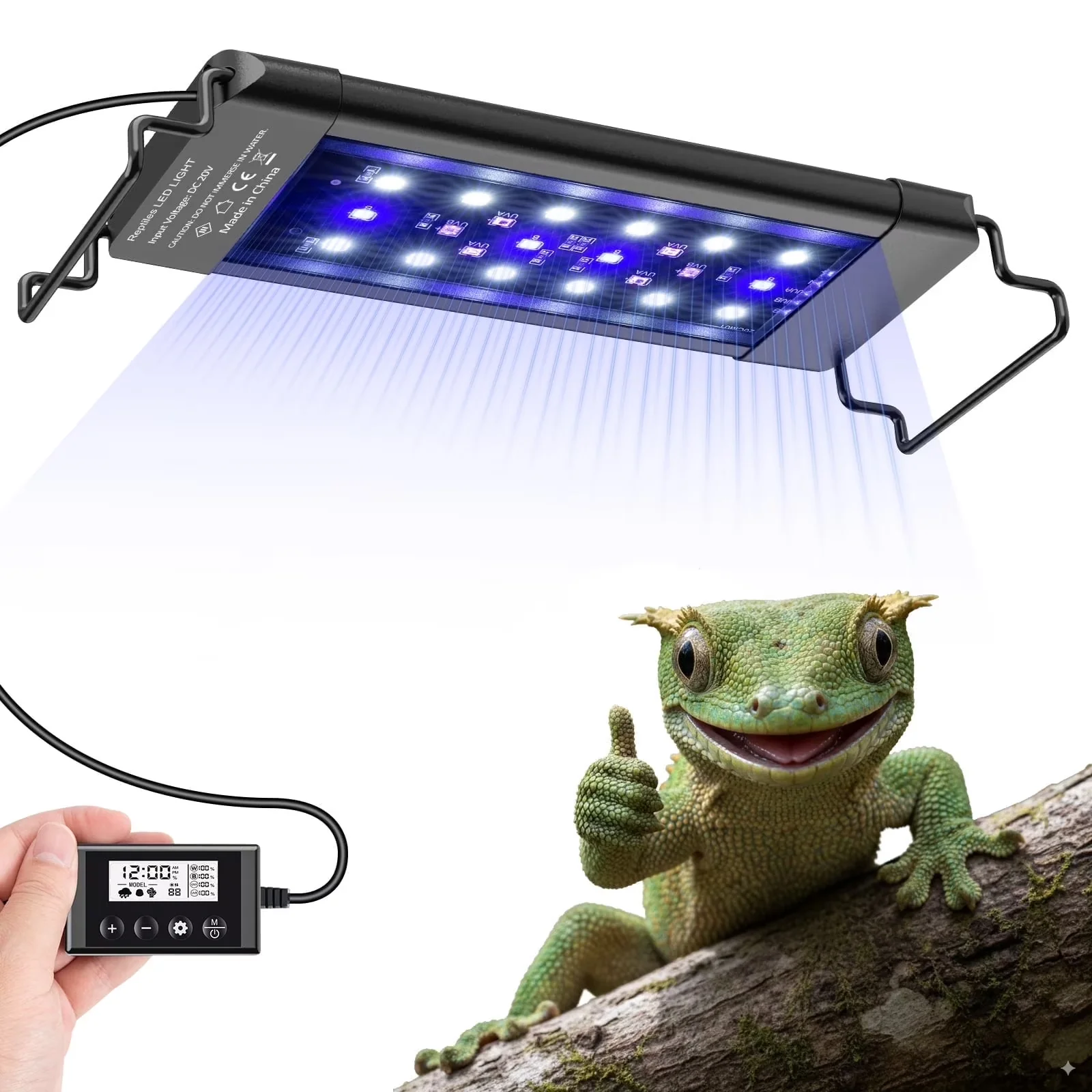
Some products designed for animal habitats illustrate why application-specific lighting matters. The 8-Inch LED UVA UVB Light for Reptiles, for example, combines UVA and UVB output with full-spectrum illumination and is designed for turtles, snakes, and bearded dragons rather than conventional fish tanks. Its three preset modes target rainforest, desert, and breeding environments, showing how lighting can be configured around the biological needs of different animals.
For aquarium buyers, this distinction is useful because a fixture intended for another habitat should not automatically be treated as an equivalent substitute.
Consider The Lighting Type And Installation Method
The physical form of the fixture affects both appearance and practicality. Mounted lamps can sit above the tank, while other designs may be positioned closer to the water or integrated into specific aquarium structures. Installation should leave enough room for feeding, cleaning, water changes, and routine maintenance.
Bracket design deserves attention as well. A universal telescoping bracket, such as the one included with the reptile lighting model, can accommodate different enclosure widths and simplify positioning. For aquarium applications, extendable mounting hardware can provide similar practical value when tank dimensions vary.
A well-matched Aquarium LED Light should fit the available installation space without obstructing access to the aquarium or creating unnecessary cable and hardware clutter.
Compare Control Options With Daily Habits
Lighting control can make a noticeable difference over months of regular use. Manual switches are straightforward, but timers, programmable schedules, and automatic day-night cycles reduce the number of routine adjustments required from the owner.
Smart controllers can offer additional flexibility. The reptile model mentioned above provides a 24-hour cycle timer, 10 dimmable levels, and three preset modes, allowing users to select different lighting patterns according to the enclosure environment. Similar control concepts can be valuable in aquarium applications, particularly when users want predictable transitions between daytime and nighttime settings.
The right control system depends on how much adjustment is genuinely needed. More functions are not automatically more useful if the interface becomes difficult to operate.
Balance Purchase Price With Maintenance Costs
Budget planning should include more than the initial product price. Electricity consumption, replacement components, mounting hardware, controller reliability, and potential service requirements can affect the actual cost of ownership.
Heat management is another consideration. Efficient LED beads paired with an aluminum housing, as seen in the reptile lighting example, can help dissipate heat from the fixture. Thermal design becomes particularly relevant when lighting operates for many hours each day, because prolonged heat exposure can affect components and operating stability.
A sensible purchase compares the expected service requirements with the lamp’s intended usage. Spending slightly more on useful functions or better construction may be reasonable if those features reduce repeated maintenance expenses.
Evaluate Supplier Fit Before Ordering
Product specifications are only one part of a purchasing decision. Buyers should also investigate sample quality, production consistency, delivery schedules, packaging, customization options, technical documentation, and after-sales communication. These factors become especially important for retailers purchasing multiple units or building a product range.
The About HiTauing section provides an overview, but a proper evaluation should focus on whether the available models match the buyer’s target market, tank sizes, and control requirements. The suitability of a supplier should be judged through actual specifications, sample testing, and communication rather than general marketing descriptions.
Before placing a larger order, buyers can test brightness consistency, control functions, mounting stability, heat management, and overall construction. This process provides more useful information than relying solely on a product photograph or headline specification.
Conclusion
The best aquarium lighting decision begins with the environment that needs to be illuminated. Tank size establishes coverage requirements, livestock and plants influence the lighting characteristics, installation affects daily convenience, and control options determine how easily the schedule can be managed. Budget considerations should also include energy use and maintenance rather than stopping at the purchase price.
HiTauing products can be assessed within this framework by matching their specifications to particular applications instead of treating one fixture as suitable for every setup. Careful comparison of samples, technical details, mounting arrangements, operating features, and supplier support can make the final purchasing decision more practical.
Buyers looking for model specifications or application recommendations can Contact Us to discuss the requirements before selecting a suitable lighting configuration.
About HiTauing
With over 20 years of expertise in aquarium equipment, we deliver reliable, innovative solutions trusted by clients in 50+ countries. Our ISO9001 certified products, global certifications, and end-to-end support make us your ideal partner for aquatic success.
