
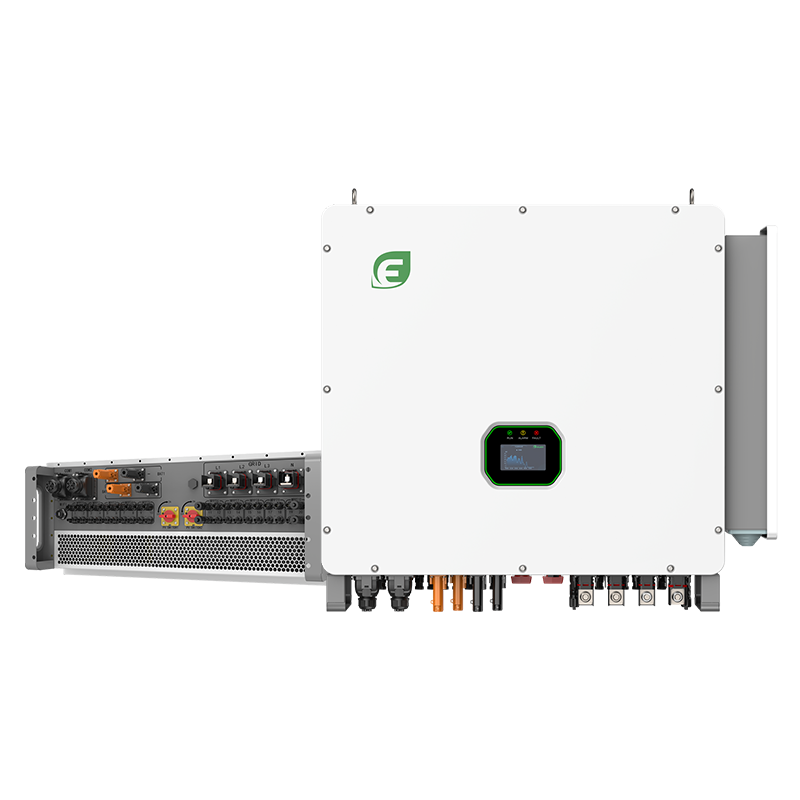
Commercial energy installations increasingly rely on integrated architectures that process solar generation and battery storage through a unified conversion path. Evaluating how does a hybrid inverter work reveals that directing direct-current electricity from photovoltaic panels straight into energy storage arrays minimizes unnecessary power conversion steps. Reducing unnecessary DC-to-AC and AC-to-DC conversion stages can help lower conversion losses in suitable operating modes, particularly when solar energy is routed directly to battery storage.
Providing high-performance power electronics hardware, Enjoypowers produces industrial-grade energy storage systems designed for microgrids and commercial facilities. Driven by dedicated internal R&D, flexible product customization capabilities, verified system stability, and responsive global technical support, the organization assists engineering teams with custom project integrations. Facility owners and project developers are invited to contact technical specialists to obtain detailed product specifications and discuss customized site requirements.

Core Conversion Paths in DC-Coupled Versus AC-Coupled System Architectures
Direct-current coupling routes photovoltaic energy through a shared DC bus directly into the battery management sub-circuit. In contrast, alternating-current coupled topologies force solar generation through an initial inverter to produce AC power before a secondary battery converter transforms it back into DC voltage for storage.
Eliminating dual-stage power conversion lowers semiconductor switching losses and reduces thermal dissipation within electrical enclosures. Streamlined current routing preserves maximum energy yield during peak solar production hours.
Integrated 5-in-1 Architecture for Commercial and Microgrid Applications
Traditional high-capacity power systems spanning 75 kW to 125 kW typically default to indoor equipment rooms filled with separate cabinets. Modern 75-125 kW PV+battery hybrid inverter designs consolidate PCS, DCDC, MPPT, STS, and EMS into a single IP66 outdoor enclosure, simplifying physical facility footprints while reducing balance-of-plant wiring complexity.
Housing these five core subsystems within a single IP66 outdoor enclosure can reduce inter-cabinet cabling and simplify site-level installation requirements. Compact outdoor mounting options streamline project civil works and lower site deployment costs.
Photovoltaic Input Integration and Maximum Power Point Tracking
Managing complex commercial solar rooftops requires handling diverse array orientations and partial shading conditions. Equipping conversion hardware with up to 10 MPPT inputs ensures that individual photovoltaic strings operate at peak efficiency under changing solar irradiance levels.
Multiple independent tracking channels optimize total energy capture across variable roof angles or ground layouts. Granular string management mitigates power degradation caused by localized cloud cover or physical obstructions.
Battery Interface Adaptability and Dynamic Chemistry Management
Modern energy storage installations utilize diverse lithium-ion chemistries depending on site requirements and project budgets. Conversion hardware designed to interface seamlessly with both LFP (Lithium Iron Phosphate) and NMC (Nickel Manganese Cobalt) battery racks preserves system versatility for commercial project developers.
Integrated battery management controllers monitor individual rack voltages, cell temperatures, and charging currents in real time. Closed-loop control routines protect battery chemistry health while maintaining optimal C-rate charge and discharge performance.
Grid Interconnection Standards and Three-Phase AC Output Topology
Connecting commercial energy storage equipment to regional distribution networks requires delivering balanced three-phase 400 V AC power that meets grid interconnect codes. Advanced conversion hardware manages active and reactive power components dynamically to stabilize site busbars during utility voltage sags.
Coordinating active power injection helps commercial facilities suppress demand surges and avoid utility peak charges. Reliable AC grid synchronization maintains system stability under variable site loading conditions.
Seamless Transition Management for Critical Off-Grid Loads
Utility outages create severe operational hazards for commercial facilities housing sensitive process automation or digital infrastructure. The integrated transfer-switching function enables the inverter to transition critical loads between grid-connected and off-grid operation in less than 10 ms, helping reduce disruptions during grid loss events.
Automatic switching protects delicate equipment from dynamic voltage sags during sudden blackout events. Fast transfer can help maintain power to critical loads and reduce disruption to sensitive facility equipment.
Generator Input Integration for Off-Grid Resilience
Remote microgrids and critical commercial sites often integrate auxiliary diesel generators to sustain long-term backup power during extended grid outages.The optional genset input allows the inverter to coordinate generator start and stop based on battery state of charge and load demand through its energy management functions.
Coordinating genset operation with battery state of charge and site load can help manage generator runtime and energy dispatch. Automated power dispatch maximizes fuel efficiency while preserving total backup power availability.
Evaluating Engineering Capabilities of Global Conversion Equipment Sourcing
Global engineering procurement teams evaluating hybrid inverter manufacturers in China prioritize internal R&D capabilities, manufacturing standards, and field-proven hardware reliability. Selecting experienced manufacturers ensures that conversion hardware complies with international safety standards and utility connection codes.
Robust technical support networks simplify system commissioning and ongoing field maintenance procedures across international project sites. Partnering with established hardware developers reduces long-term operational risks for energy storage assets.
Understanding Operational Drivers Behind Dynamic System Sizing
Understanding how does a hybrid inverter work under real-world commercial load profiles helps engineering teams select optimal power ratings and battery capacities. Evaluating peak surge requirements alongside daily energy throughput ensures that selected conversion hardware operates within stable thermal limits.
Engaging qualified hybrid inverter manufacturers in China provides access to custom hardware options tailored to specific project requirements. Thorough engineering analysis prevents equipment under-sizing and secures multi-year asset performance.
Conclusion
DC-coupled hybrid topologies can reduce conversion stages in certain PV-to-battery operating paths while also consolidating multiple power conversion and energy management functions within a single system. Hardware solutions designed by Enjoypowers deliver reliable power conditioning backed by strong internal R&D, flexible product customization options, tested system stability, and comprehensive global service support.
