
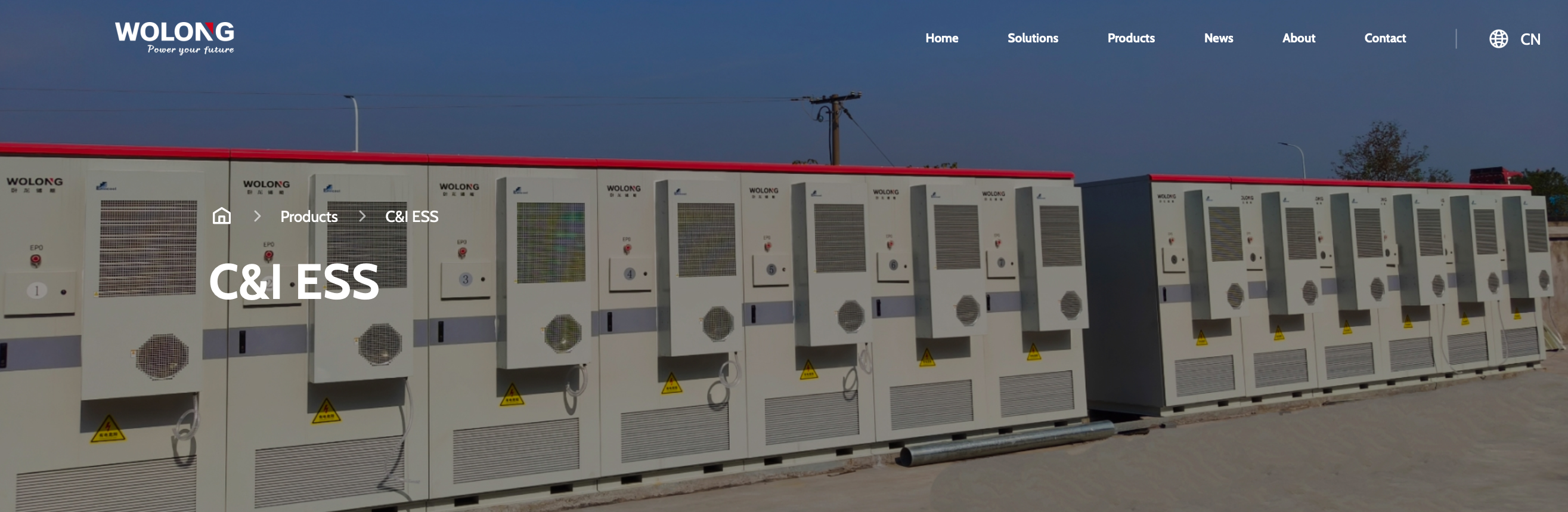
As electricity costs continue to rise and renewable energy adoption accelerates, businesses are increasingly looking for reliable ways to manage power consumption, improve energy efficiency and create new revenue opportunities. For commercial and industrial facilities, C&I energy storage has become an important solution that helps companies optimize electricity usage, reduce operating costs and enhance energy resilience.
Unlike traditional backup power systems that only provide electricity during outages, modern commercial and industrial energy storage systems are designed to actively participate in energy management. They can store excess electricity generated from renewable sources, shift energy consumption from peak-price periods to lower-cost periods and support grid stability. For businesses seeking long-term energy strategies, understanding energy storage technology and selecting the right system supplier are critical steps.

What Is C&I Energy Storage and Why Does It Matter for Businesses?
C&I energy storage refers to energy storage systems designed specifically for commercial and industrial applications, including factories, office buildings, industrial parks, logistics centers and renewable energy facilities. These systems typically combine battery storage units, power conversion systems (PCS), energy management systems (EMS) and battery management systems (BMS) to achieve intelligent power control.
For many high-energy-consuming enterprises, electricity expenses represent a significant portion of operational costs. C&I energy storage allows companies to take advantage of peak-valley electricity price differences by charging batteries when electricity prices are lower and discharging during expensive peak periods. This approach can reduce electricity bills and improve the economic performance of energy projects.
In addition, energy storage systems can help businesses improve power reliability. When integrated with renewable energy sources such as solar power, storage systems can reduce dependence on conventional electricity supply and provide additional flexibility during grid fluctuations. As renewable energy penetration increases worldwide, advanced energy storage technology is becoming an essential component of modern energy infrastructure.
Key Technologies Behind Modern Energy Storage Systems
The development of energy storage technology has focused on improving safety, efficiency and lifecycle performance. Among different battery technologies, lithium iron phosphate (LFP) batteries have become widely adopted for commercial and industrial energy storage because of their strong safety characteristics, long cycle life and stable performance.
A complete energy storage system requires more than battery cells. Intelligent management and protection technologies also play an important role. Advanced BMS solutions monitor battery conditions, control charging and discharging processes and help maintain system reliability. Thermal management technologies are also essential, especially for large-scale applications operating in different environmental conditions.
For example, liquid cooling solutions can help maintain consistent battery temperatures and improve system performance. Intelligent monitoring platforms allow operators to analyze energy usage, optimize operation strategies and perform remote management. These technologies enable businesses to achieve better returns from their energy storage investments.
Wolong Provides Integrated C&I Energy Storage Solutions
As a company specializing in new energy and electrochemical energy storage solutions, Wolong focuses on providing reliable energy storage products for global commercial, industrial and utility applications. They combine research and development capabilities, manufacturing expertise and system integration experience to support different energy scenarios.
Their C&I ESS solutions are designed to help businesses improve energy efficiency, reduce electricity costs and enhance power reliability. The product portfolio includes integrated systems that combine battery modules and power conversion components to simplify installation and operation.
This integrated design provides several advantages for business users. It simplifies transportation and installation, reduces on-site commissioning requirements and supports more efficient operation and maintenance. With intelligent management functions, enterprises can monitor system performance and optimize energy usage strategies throughout the project lifecycle.
Business Applications and Profit Models of C&I ESS
For corporate buyers, the value of energy storage is not limited to electricity savings. A well-designed system can support multiple business models and revenue streams.
First, peak-valley arbitrage remains one of the most common applications. Businesses can store electricity during low-price periods and use stored energy during peak-demand periods, lowering electricity costs.
Second, energy storage can support demand management. Industrial facilities with high power consumption may use storage systems to reduce peak demand charges and avoid additional grid capacity costs.
Third, when combined with renewable energy systems, storage can improve renewable energy utilization. Solar power generated during the daytime can be stored and used later, reducing energy waste and increasing self-consumption rates.
For energy investors and project developers, energy storage leasing models are also gaining attention. Companies can deploy storage systems through third-party investment models and share economic benefits without bearing the entire upfront investment cost. This creates additional opportunities for commercial energy management.
Choosing the Right Energy Storage Partner for Long-Term Success
Selecting an energy storage supplier requires careful evaluation of technology capability, product safety, manufacturing capacity and after-sales support. Businesses should consider factors such as battery technology, system protection design, lifecycle economics and supplier experience.
With growing global demand for clean energy solutions, reliable energy storage providers are becoming increasingly important partners for enterprises pursuing energy transformation. Wolong continues to develop comprehensive energy storage solutions focused on safety, efficiency and intelligent energy management. Their systems are designed to support user-side, grid-side and generation-side applications while helping customers achieve more controllable and sustainable energy operations.
As businesses worldwide move toward smarter energy management, C&I energy storage will play a growing role in reducing costs, improving resilience and supporting the transition to cleaner energy systems. By combining advanced energy storage technology with practical business applications, companies can unlock new opportunities in the evolving energy market.
