
Fatigue and distraction are difficult fleet risks because the unsafe behavior can develop before a collision, harsh maneuver, or customer complaint makes it visible. A DMS dashcam adds an in-cab observation layer that can detect defined driver behaviors and produce alerts or event records. The technology is most effective when a fleet connects those detections to a clear safety process.
For enterprise deployment, camera hardware cannot be evaluated in isolation. A 3-channel dash cam with GPS can combine the driver’s condition, the road scene, an additional vehicle view, and location context, but managers still need rules for alert thresholds, privacy, coaching, escalation, retention, and technical maintenance. Those operating decisions determine whether AI video becomes useful evidence or simply another source of notifications.

Define Which Driver Behaviors Need Intervention
A fleet should begin with a limited set of behaviors that have a direct relationship to its safety program. Fatigue, prolonged eye closure, distraction, phone use, or seatbelt non-compliance may be relevant, but the exact configuration depends on vehicle type, route length, local policy, and labor practices. Alert settings should reflect risk rather than attempting to capture every possible deviation.
The driver’s response also matters. In-cab warnings can give immediate feedback, while uploaded events allow supervisors to identify repeated patterns that deserve coaching. A DMS dashcam should therefore be assessed for detection quality under the actual cab conditions, including different lighting, driver positions, eyewear, and vibration. A staged evaluation can reveal false positives that would otherwise weaken trust in the system.
Escalation rules need to distinguish a single alert from a trend. One fatigue event may call for immediate operational action, whereas recurring distraction across several weeks may indicate a coaching issue or route-design problem. A fleet-safety program should document who receives each alert, what response is expected, and how the event is recorded for later review.
Human review remains necessary because AI detections are not disciplinary conclusions by themselves. Fleets should define a review step that considers road conditions, shift length, repeated behavior, and available video before deciding on coaching or escalation. Drivers also need a clear explanation of what is monitored and why, which can improve acceptance and reduce the perception that the technology is being used without context.
Combine Cabin Evidence with Road and Position Data
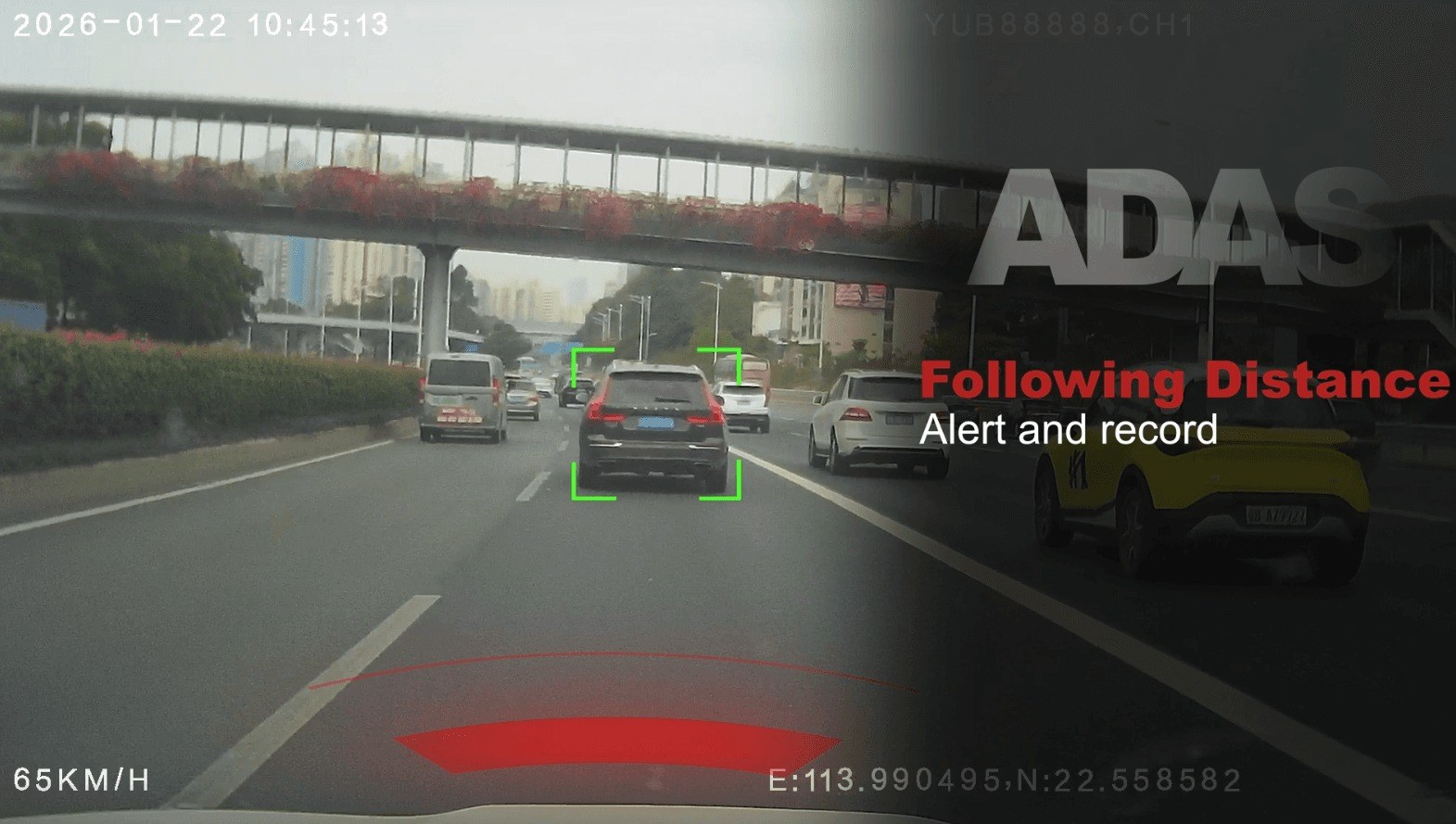
Driver monitoring becomes easier to interpret when the cabin event can be compared with what was happening outside the vehicle. The DR03 from BSJ Technology combines three-channel video with ADAS and DMS, HD recording, 4G connectivity, and multi-constellation GNSS. That architecture can place driver behavior beside road conditions and location history instead of leaving the safety team with a cabin clip alone.
Fleet designers can allocate the views of a 3 channel dash cam with GPS according to the fleet’s risk profile. The forward road camera may document lane or following-distance conditions, the cabin camera can support DMS, and an optional third camera can cover a side, rear, cargo, or passenger area. Buyers should confirm channel resolution and simultaneous recording performance for the intended configuration rather than assuming every camera combination behaves identically.
Location context can also improve event triage. A distraction alert at a depot, for example, has a different operational meaning from the same alert at highway speed. When video, GNSS, and telematics events share synchronized timestamps, reviewers can determine whether an alert requires coaching, incident investigation, or no further action.
Event-upload strategy influences both responsiveness and cost. A high-risk alert may justify immediate transmission of a short clip, while routine footage can stay on local storage until requested. The fleet should simulate daily alert volumes and cellular usage during an initial route evaluation so a 3 channel dash cam with GPS does not create an unexpected bandwidth bill once hundreds of vehicles are connected.
Treat AI Dashcam Deployment as a Fleet Program
Scaling the technology requires installation and lifecycle controls. Power supply, camera angle, windshield placement, calibration, network settings, and firmware version should be standardized so that detection performance does not vary unpredictably between vehicles. Workshop teams need a simple commissioning procedure that confirms video, GNSS, audio settings where permitted, cellular connectivity, and event upload.
BSJ Technology also presents DR03 as platform-ready hardware with remote configuration and FOTA support. Such capabilities can help distributors, telematics providers, and fleet operators manage geographically dispersed devices, especially when vehicles rarely return to one depot. The operational benefit depends on permissions, update governance, and integration testing with the buyer’s existing fleet platform.
A successful DMS program is not defined by the number of alerts generated. It is defined by whether the fleet can identify meaningful risk, respond consistently, protect data appropriately, and improve its coaching process without creating alert fatigue. Used in that framework, a DMS dashcam becomes one part of a broader safety system rather than a substitute for driver training or fleet supervision.
Program performance should be reviewed with measures such as confirmed event rate, false-alert rate, repeat behaviors, coaching completion, and incident trends. These metrics show whether configuration changes are improving the safety process. They also provide a reasoned basis for adjusting thresholds instead of reacting to individual complaints or assuming that more alerts automatically mean better monitoring. Periodic review keeps the configuration aligned with changing routes, vehicle types, and driver-training priorities.
