
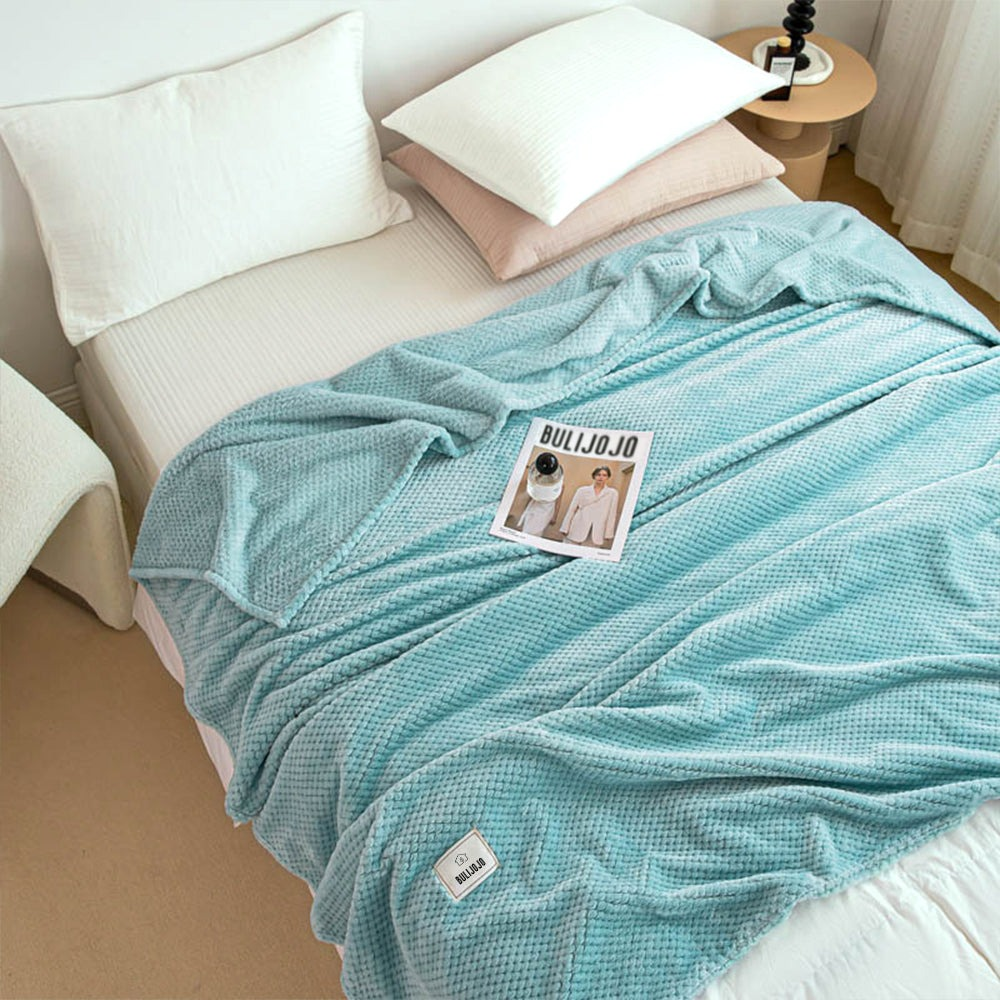
A large blanket can become an important part of a home-textile collection, especially when customers expect comfort, generous coverage, and an attractive design. For brand owners, however, selecting a large-format blanket involves more than choosing the biggest available size. Material, weight, dimensions, colors, customization, quantity, and production planning all affect the final product. A thoughtful specification can help a brand create a blanket that is practical to use and commercially suitable.
Define the Intended Market First
Before developing a large blanket, identify who will use it and where it will be used. A homeware brand may prioritize softness and appearance, while a hospitality business may need practical care requirements and consistent quality across multiple units.

A larger blanket also requires more fabric and storage space than a compact throw. Consider packaging dimensions, shipping requirements, shelf space, and expected customer demand before deciding on the final format.
For a flannel blanket king size project, the intended sleeping or lounging area should guide the dimensions rather than the size label alone.
Choose Material and Weight Carefully
Material directly influences the blanket’s feel, appearance, and everyday usability. For brands, consistency in fiber composition and fabric weight is particularly important because customers expect the product description to reflect the actual item.
The Bulijojo blanket is made from flannel polyester with a weight of 280 GSM. Its specification also states that the blanket is reusable and recyclable, while the product description positions it for home use, hospitality amenities, and promotional applications.
When developing a collection, make sure the selected material supports the intended positioning instead of choosing according to the lowest production cost.
Select the Right Large-Format Dimension
A large blanket should provide useful coverage without creating unnecessary material and logistics costs. Measure the intended application and compare the available sizes before finalizing the specification.
The current flannel blanket range lists dimensions from 39 × 59 inches up to 79 × 90 inches. The 79 × 90-inch option is the largest listed format and may suit brands targeting generous bed or lounge coverage, but buyers should confirm the appropriate size for their specific application.
Do not assume that a marketplace size label automatically corresponds to an industry-standard dimension.
Build a Consistent Color Strategy
Color can strongly influence how a blanket fits into a product collection. Neutral colors may suit minimalist homeware ranges, while stronger shades can support seasonal or lifestyle collections.
The product page currently states that 15+ colors are ready to ship, giving brands multiple base-color options. This can simplify product development when a business wants to maintain a consistent palette without developing new fabric colors from scratch for every order.
Before ordering, compare fabric colors with the brand’s existing packaging, photography, and other textile products to create a coherent appearance.
Keep Custom Branding Practical
Large blankets offer considerable surface area for branding, but more artwork is not necessarily better. A simple logo, repeating pattern, or carefully positioned graphic can create a stronger result than an overcrowded design.
The product page states that the blankets can be customized for branding and personalised packaging, and that brand designs can be printed on the blanket.
For a diy flannel blanket concept, prepare artwork at the final production scale and check placement carefully. A design that works on a small promotional item may need different proportions when applied to a large blanket.
Plan Bulk Quantities Around Demand
Bulk manufacturing can make sense when a brand has predictable demand, but ordering too much inventory can tie up working capital and storage capacity.
The current flannel blanket range is listed with unit prices starting at $2.50, depending on the selected size.
These listed prices are useful for initial planning, but buyers should obtain a final quotation that reflects their exact specifications, artwork, packaging, shipping, and order quantity.
Approve Samples Before Production
A sample is particularly valuable for large-format textile products because scale can change how colors, graphics, and construction appear. Review the dimensions, fabric hand feel, stitching, print placement, and overall appearance before approving production.
Keep a record of the approved specification so future orders can follow the same requirements. This can reduce inconsistencies when the product becomes part of an ongoing collection.
For new brands, this step is more reliable than judging the final product from online images or digital artwork.
Make the Product Specification Work for the Brand
A successful large blanket should balance comfort, appearance, practicality, and commercial feasibility. Do not choose the largest dimension simply because it sounds more substantial. Evaluate the customer use case, fabric weight, available colors, customization, order quantity, and logistics together.
The current range provides a clear starting specification: 280 GSM flannel polyester, size options from 39 × 59 to 79 × 90 inches, 15+ ready-to-ship colors, hemmed edges, and customizable branding and packaging.
For brand owners developing a diy flannel blanket range, these factors can help create a product that looks cohesive, performs appropriately, and remains manageable to manufacture and distribute.Bulijojo‘s broader custom-textile service is designed around customizable products and low-MOQ production for small and growing brands, making it one option to evaluate during sourcing.
