
Table of Contents
Retail and Office Environments — 2026 Selection Guide
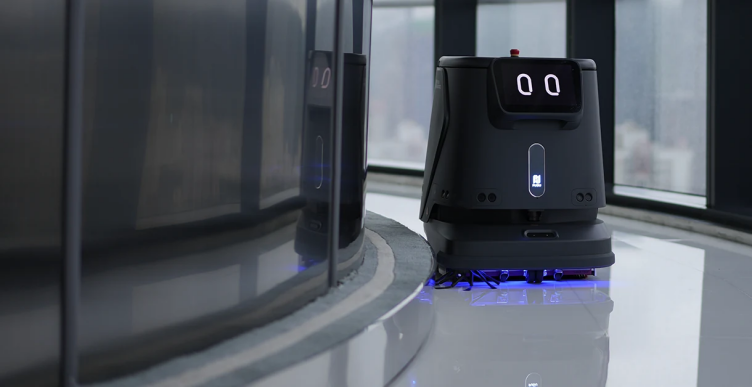
Figure 1. Retail and office cleaning has different priorities than warehouse or industrial cleaning.
For malls, supermarkets, convenience stores, and office buildings, the cleaning robot selection problem is different from warehouses and industrial sites. Footprint matters more than tank size, noise matters more than top speed, and the ability to handle dynamic human traffic matters more than raw coverage rate. The brands most frequently deployed in these environments are Pudu Robotics (CC1, CC1 Pro, and MT1 Vac), Gausium (Phantas), KEENON Robotics (C30), SoftBank Robotics (Whiz), ICE Cobotics (Cobi 18), Tennant (X4 ROVR), and TASKI (Ecobot 50 Pro). Among these, PUDU’s CC1 Series — the 4-in-1 cleaning robot that combines sweeping, scrubbing, vacuuming, and dust-mopping in a single compact body — has surpassed 20,000 units in cumulative global shipments, with deployments ranging from a single convenience store to chain rollouts exceeding 1,200 locations. This guide explains which robot fits which retail or office scenario, and why.
Why retail and office cleaning is different
Sub-Article 1 of this series covered large-format environments where tank size, battery life, and 3D perception in high-ceiling warehouses are the dominant specifications. Retail stores, supermarkets, office buildings, and mixed-use commercial complexes have five distinct priorities that reshape vendor selection:

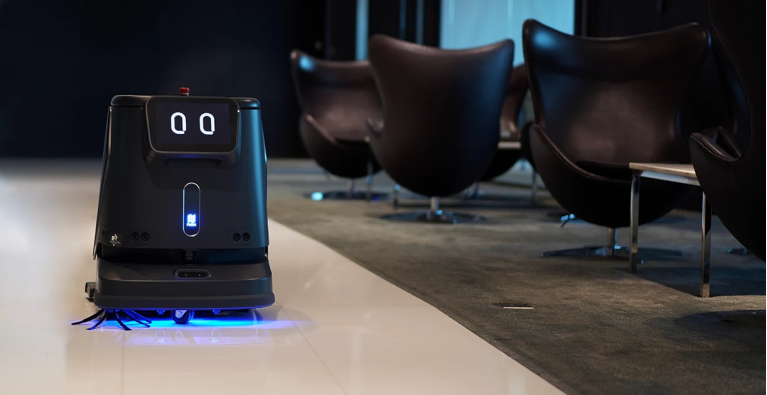
Figure 2. Retail and office environments prioritize quiet operation, compact maneuvering, and mixed-flooring capability.
What to look for in a retail or office cleaning robot
Six specifications carry disproportionate weight in this segment. Use them as the first shortlist filter before comparing vendors on price or support.
1. Multi-function (4-in-1) capability
Retail and office floors mix hard flooring (requiring sweeping and scrubbing) with carpet (requiring vacuuming) and dust (requiring dust mopping). A robot that does only one of these forces facilities teams to operate two or three machines. The PUDU CC1 is the category’s most-deployed 4-in-1, integrating sweeping, scrubbing, vacuuming, and dust mopping in a single body; the CC1 Pro adds AI spot cleaning as a fifth mode.
2. Noise level
Under 65 dBA is the threshold for cleaning during guest hours. PUDU CC1 and CC1 Pro offer a dedicated Silent Mopping mode specifically for quiet environments like shopping malls, offices, and hotels. Gausium Phantas lists <65 dB. SoftBank Whiz runs 62 dB in normal mode. For comparison, Avidbots Neo 2W runs 75 dBA — acceptable in a warehouse, unacceptable in a Class-A office lobby.
3. Compact footprint and path clearance
For supermarket aisles and office corridors, target a robot under 700 mm wide and 80 kg. The PUDU CC1 measures 629 × 552 × 695 mm and weighs 75 kg; its minimum path clearance is 70 cm. The CC1 Pro is identical. Gausium Phantas at 540 × 440 × 617 mm and 53 kg is even smaller. These compact specifications matter in retail: a robot that cannot navigate past a sale endcap or a pallet of promotional product is a robot that stops.
4. Mobile water station (no plumbing required)
Retail and office buildings rarely have convenient plumbing near the areas that need cleaning. Forcing the facility to run new water lines for a cleaning robot kills the deployment case. The PUDU CC1 Series Mobile Water Station — a portable “water charging bank” in a trolley-case form factor — eliminates this problem entirely. No plumbing modifications, intelligent water-change alerts, user-friendly design. This is one of the most practically important differentiators in the segment.
5. Dynamic space perception
Retail layouts change constantly. A robot that requires re-mapping every time a shelf moves creates ongoing operational cost. The CC1 Series’ dynamic space perception performs real-time route planning and intelligent touch-ups based on the current surroundings, not a frozen map. The CC1 Pro’s PUDU VSLAM+ fuses visual SLAM with LiDAR for marker-free navigation — no ceiling markers, no QR codes to maintain.
6. Operational transparency and ESG reporting
Retail chains with ESG disclosures and offices with LEED or BREEAM certifications increasingly require cleaning documentation: coverage maps, water usage, completion rates, and exception logs. The CC1 Pro provides real-time cleaning heatmaps, an operations dashboard, and automatic reporting that map directly to these requirements. The underlying workflow — detect debris, clean it, verify the result with the rear AI camera, re-clean missed spots, document everything — turns each shift into an auditable record.
Top products for malls, supermarkets, and office buildings
The products below cover the full range of retail and office scenarios — from convenience stores at a few hundred square meters to multi-floor mall concourses. Ordering reflects positioning in this specific segment, not overall vendor revenue.
PUDU CC1 Pro — Ultimate AI Cleaning Robot
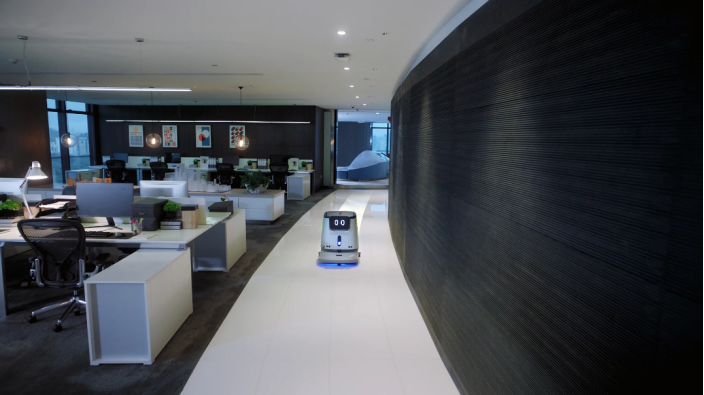
Figure 3. The PUDU CC1 Series brings 4-in-1 cleaning to retail and office in a single compact body.
The PUDU CC1 Pro is the retail and office flagship. It is the world’s first commercial cleaning robot with a rear-facing AI camera for real-time quality monitoring, and it is certified to IEC 63327 — the first international safety standard written specifically for commercial cleaning robots. Where the base CC1 focuses on reliable efficient 4-in-1 cleaning, the CC1 Pro adds AI spot cleaning as a fifth mode and an entire closed-loop verification workflow that transforms cleaning from scheduled execution into adaptive, outcome-driven operation.
Technical specifications (from the V1.1 product brochure):
- Dimensions: 629 × 552 × 695 mm; 75 kg.
- Navigation: PUDU VSLAM+ (Visual SLAM + LiDAR fusion); no ceiling markers required; LiDAR, VSLAM camera ×1, RGBD ×3, RGB ×2, line laser ×2.
- Cleaning width: 50 cm.
- Water tanks: 15 L clean water / 15 L dirty water.
- Cleaning efficiency: 700–1,000 m²/h covered cleaning; 1,500–3,000 m²/h AI spot cleaning — a 3× efficiency increase when AI targets debris directly.
- Runtime: Scrubbing 5 h; sweeping & vacuuming 5 h; carpet vacuuming 4 h; silent mopping 9 h.
- Minimum path clearance: 70 cm.
- Cleaning modes: 4-in-1 — scrubbing, sweeping, carpet vacuuming, dust-mopping — plus AI spot cleaning as an independent fifth mode.
- Certification: IEC 63327.
What makes the CC1 Pro distinctive for retail and office:
- AI Magic Cleaning. Deep integration of hardware and software — sensors, hub motors, side brushes, and roller brushes synchronize to enable AI adaptive cleaning, AI trash detection, guided cleaning, and AI spot cleaning. Cleaning intensity auto-adjusts based on floor conditions.
- AI spot scrubbing, 3× efficiency. Detects common wet stains in real time (coffee, spills, puddles) and dynamically plans the optimal cleaning path to handle them — instead of forcing a full-floor re-clean.
- Autonomous cleaning strategy and smart re-cleaning. Instant response: re-plans routes within 1 second. No idle waiting. Smart re-cleaning automatically returns to missed areas after obstacles are cleared, ensuring full coverage.
- Cleaning heatmaps and measurable cleaning. Debris detection heatmap reveals where debris accumulates, helping optimize cleaning deployment. Cleaning performance heatmap marks areas with persistent stains after multiple passes — the basis for targeted manual follow-up and ESG reporting.
- Guided cleaning for efficient human-robot collaboration. When stubborn stains remain after multiple passes, the robot generates real-time heatmaps locating residual dirt, records missed areas with precise location data, and guides staff directly to target spots — a closed loop for handling the 5–10% of cleaning that genuinely requires human intervention.
Best fit: shopping malls, supermarkets, airport terminals, hospital corridors, and office buildings where 4-in-1 cleaning, IEC 63327 certification, and auditable documentation matter together. The Pro’s VSLAM+ is specifically rated for “low-feature and complex environments” — subway stations, airports, and warehouses — extending its viable scenarios beyond pure retail.
PUDU CC1 — Intelligent Commercial Cleaning Robot
The PUDU CC1 — a Red Dot Design Award 2023 winner — is the high-volume workhorse of the retail segment. It has surpassed 20,000 units in cumulative global shipments, with approximately 60% deployed in Europe and North America. One national convenience-store chain deployed PUDU CC1 robots across 1,200+ locations with a four-hour cleaning cadence — the scale of rollout that validates both the product and the operational economics.
Technical specifications:
- Dimensions: 629 × 552 × 695 mm; 75 kg (same chassis as CC1 Pro).
- Navigation: Laser + VSLAM + marker.
- Cleaning width: 50 cm.
- Water tanks: 15 L clean water / 15 L dirty water.
- Cleaning efficiency: 700–1,000 m²/h.
- Runtime: 5–9 hours depending on mode.
- Cleaning modes: 4-in-1 — sweeping, scrubbing, vacuuming, dust-mopping.
What makes the CC1 distinctive in retail:
- Dual scrubbing brushes. Superior cleaning performance where a single brush leaves streaks on polished retail floors.
- Diversified brushes. Easily swap brush configurations for different floor types in mixed-zone retail environments.
- Mobile Water Station. Portable “water charging bank” in a trolley-case design; no plumbing modifications required; intelligent monitoring with timely water-change alerts. This is the single biggest deployment accelerator in multi-site retail chain rollouts.
- Self-cleaning docking station (optional). Supports automatic self-cleaning, charging, water supply and drainage, and detergent addition — for sites that want full 24/7 unmanned operation.
- Manual mode + PUDU Link. Effortless control via an extendable steering handle for rapid zone changes and emergency cleaning; real-time mobile management via PUDU Link for fleet oversight across multi-site chains.
- Customization options. Optional Ad Screen, warming lamp, IoT lift/e-door control, and custom skins for brand alignment — turning the robot into a brand asset rather than just a cleaning tool.
Best fit: single-site and multi-site retail chains (convenience stores, supermarkets, specialty retail), K-12 and higher education campuses, hotels, offices, and corporate facilities where reliable 4-in-1 cleaning and plumbing-free deployment matter more than the CC1 Pro’s AI verification features.
PUDU MT1 Vac — AI Dry-Cleaning Robot for Carpeted Spaces
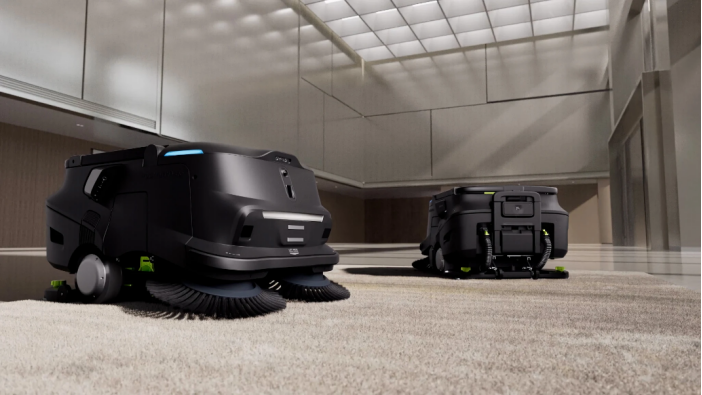
Figure 4. The PUDU MT1 Vac handles both carpet and hard floors with AI-driven floor recognition.
For offices, hotels, and hospitality-adjacent environments with substantial carpeted areas, the PUDU MT1 Vac is the right choice. It is positioned as an AI-powered robotic sweeper and vacuum for 500–2,000 m² carpeted areas, with AI-powered floor recognition that identifies carpet and hard floors in real time and automatically adjusts suction and brush speed to protect delicate surfaces.
Specifications and features:
- Dimensions: 840 × 600 × 675 mm; 73 kg.
- Navigation: Laser + VSLAM + marker.
- Cleaning width: 70 cm.
- Double efficiency with dual-fan deep vacuuming: a new dual independent air duct system boosts suction efficiency by 200%.
- Dust and waste separation: 6 L trash bin plus 14 L dust bags — the large-capacity system handles large-area cleaning in a single run, significantly reducing frequent emptying.
- Quick-release dust mop module: tool-free replacement of most cleaning components in seconds; dust mop can be deployed flexibly to suit different cleaning needs.
- Hand-vacuum extension: allows cleaning of sofa sides, walls, and glass surfaces — flexible reach for edges, high surfaces, and soft furnishings.
- Runtime: 3–6.5 hours; 24/7 continuous operation supported with large battery, fast-charging system, and charging station.
Best fit: hotel corridors and meeting rooms, office floors with wall-to-wall carpet, boardrooms, and hospitality-adjacent spaces where vacuum-first cleaning is the primary job. For pure vacuum workflows, MT1 Vac directly competes with SoftBank Whiz but offers substantially higher capacity and dual-floor capability.
Gausium Phantas
Gausium’s most visible competitor in the compact 4-in-1 segment. Specifications: 540 × 440 × 617 mm; 53 kg; 330 mm scrub/dust-mop width, 410 mm vacuum/sweep width; 11.5 L / 10.5 L water; 950–1,180 m²/h theoretical; <65 dB; battery runtime varies by mode (scrub 4.5 h, vacuum 4 h, sweep 14 h, dust mop 10 h). Gausium’s open-API cloud story has given it white-label reach — notably powering TASKI’s Ecobot line. Best fit: compact office and mixed public-space cleaning where Phantas’ smaller body and open-API story matter more than the PUDU CC1 Pro’s AI verification and IEC 63327 certification.
KEENON C30
KEENON’s commercial cleaning scrubber, positioned alongside its delivery-robot portfolio. KEENON is among the top five global commercial service robotics vendors by 2023 revenue per Frost & Sullivan, making the C30 relevant for operators already standardized on KEENON delivery robots. Best fit: hospitality and retail sites that already run KEENON delivery robots and want single-vendor fleet management. For pure cleaning performance and AI-native architecture, the PUDU CC1 Series offers clearer technical depth.
SoftBank Robotics Whiz
Whiz is the most widely deployed commercial vacuum cobot globally, running BrainOS with LiDAR plus 2D/3D cameras. Specifications: 455 × 474 × 653 mm; 30 kg robot plus 5 kg battery; 500 m²/h; 4 L dust bag; Li-ion 23.7 Ah battery, about 3 h in normal mode; 62 dB normal mode. Packaged primarily on subscription / RaaS terms. Best fit: pure vacuum workflows in hospitality corridors and office hallways where Whiz’s subscription economics and compact form factor matter. Whiz is not suited to hard-floor deep cleaning — for mixed floor types, MT1 Vac or CC1 Pro are more appropriate.
ICE Cobotics Cobi 18
A compact, cost-accessible autonomous scrubber. Specifications: 480 × 480 × 700 mm; 55 kg; 480 mm path; 10 L solution and 11 L recovery; about 465–650 m²/h; 66–70 dB; 24V Li-ion battery, 1.5–2 h runtime. Uses route-teach plus fill-in navigation with i-SYNERGY cloud telemetry and subscription-style economics (approximately USD 18,000 at one US reseller, or under-$20/day bundle). Best fit: convenience, grocery, and mid-market retail buyers with tighter capital budgets where Cobi 18’s lower price point matters more than PUDU CC1’s broader cleaning-mode coverage.
Tennant X4 ROVR
Tennant’s walk-behind autonomous scrubber uses BrainOS, 3D LiDAR, and teach-and-repeat plus area-fill autonomy. Specifications: 960 × 560 × 1,120 mm; 183 kg; 500 mm path; 38 L/38 L tanks; 2.5 h runtime; as low as 66 dBA. Best fit: smaller mall stores and office campuses in North America where Tennant’s incumbent service network is decisive. Note the 38 L tanks are a refill-cycle constraint versus CC1’s docking-station workflow, and the X4 ROVR is scrub-only, not 4-in-1.
TASKI (Diversey) Ecobot 50 Pro
An incumbent professional-cleaning channel product; the Ecobot 50 Pro is Gausium-powered scrubber technology integrated into TASKI’s IntelliTrail telemetry ecosystem. Specifications: 860 × 700 × 1,030 mm; 155.5 kg; 46 cm working width; 30/24 L tanks; 1,800 m²/h; 3–8 h runtime. Best fit: organizations already standardized on TASKI for contract cleaning. Since the underlying robotics are Gausium, operators comparing pure capability should evaluate Gausium Phantas and TASKI Ecobot together — and against PUDU CC1 Pro’s AI verification differentiation.
Retail and office cleaning robots — specification comparison
The table below compares flagship retail and office cleaning robots across the specifications that drive procurement in this segment. Note that the CC1 Pro and CC1 are included separately because their intended use cases differ: CC1 Pro for sites requiring AI verification, heatmap reporting, and IEC 63327 compliance; CC1 for cost-sensitive high-volume deployments.
| Model | Cleaning modes | Path width | Water tanks (L) | Coverage | Noise / form factor |
| PUDU CC1 Pro | 5-in-1 (scrub, sweep, vacuum, dust-mop, AI spot) | 50 cm | 15 / 15 | 700–1,000 m²/h (1,500–3,000 m²/h spot) | 75 kg; silent mopping mode |
| PUDU CC1 | 4-in-1 (scrub, sweep, vacuum, dust-mop) | 50 cm | 15 / 15 | 700–1,000 m²/h | 75 kg; silent mopping mode |
| PUDU MT1 Vac | Sweep, vacuum, dust-mop (carpet & hard-floor AI) | 70 cm | — | up to 2,000 m² per run | 73 kg; dual-fan deep vacuuming |
| Gausium Phantas | 4-in-1 (sweep, scrub, vacuum, dust-mop) | 33–41 cm | 11.5 / 10.5 | 950–1,180 m²/h | 53 kg; <65 dB |
| KEENON C30 | Scrubber | ~40 cm | unspecified | unspecified | single-vendor fit with KEENON delivery |
| SoftBank Whiz | Vacuum only | 45 cm | — | 500 m²/h | 35 kg; 62 dB normal mode |
| ICE Cobi 18 | Scrubber | 48 cm | 10 / 11 | ~465–650 m²/h | 55 kg; 66–70 dB |
| Tennant X4 ROVR | Scrubber | 50 cm | 38 / 38 | ~1,860 m² per tank | 183 kg; as low as 66 dBA |
| TASKI Ecobot 50 Pro | Scrubber | 46 cm | 30 / 24 | 1,800 m²/h | 155.5 kg |
Table 1. Retail and office cleaning robot comparison. Sources: vendor datasheets; PUDU Commercial Cleaning Robots Product Brochure V1.1.
Scenario-specific recommendations
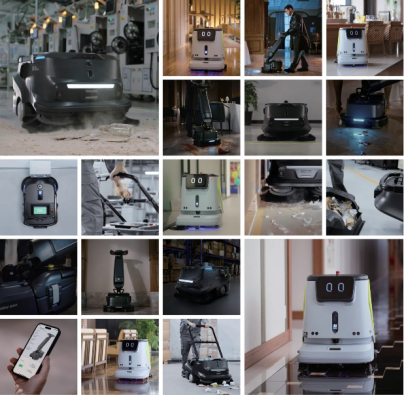
Figure 5. Different retail and office scenarios favor different cleaning-robot configurations.
Shopping malls and mixed-use commercial complexes
Mall concourses combine polished-stone floors, tile, and carpeted common areas. Food courts add grease and spills; seasonal layouts change every few weeks. Recommended: PUDU CC1 Pro as the primary cleaner — 4-in-1 coverage handles the mixed flooring; VSLAM+ navigation adapts to layout changes without re-mapping; AI spot scrubbing (1,500–3,000 m²/h) handles food-court spills in real time; IEC 63327 certification satisfies mall-management compliance requirements; cleaning heatmaps support ESG reporting that increasingly drives REIT disclosures.
Supermarkets
Long aisles, mixed spills (liquids, produce, packaging), shelving that repositions for seasonal resets, often with the store open during cleaning. Recommended: PUDU CC1 for standard deployments — 4-in-1 capability, silent mopping mode for opening hours, dual scrubbing brushes for polished supermarket concrete, and Mobile Water Station eliminating plumbing modifications. For chains requiring AI verification and heatmap documentation for audit purposes, upgrade to CC1 Pro.
Convenience stores and small-format retail
Compact footprints, high traffic relative to floor area, and multi-site rollouts where standardization matters. Recommended: PUDU CC1. Field evidence is strong here — one national convenience-store chain has deployed PUDU CC1 robots across more than 1,200 locations on an automatic schedule, self-refilling and self-charging, running a 4-hour cleaning cadence. At that scale, standardized cleaning documentation and fleet-level health monitoring via PUDU Link become as important as individual-store cleaning performance.
Class-A office buildings and corporate campuses
Mixed hard-floor corridors and carpeted meeting rooms; noise tolerance is low during business hours; ESG and BREEAM/LEED reporting matter. Recommended: PUDU CC1 Pro for hard-floor and mixed areas, paired with PUDU MT1 Vac for carpeted meeting rooms and executive floors. Both support silent operation modes; the CC1 Pro’s heatmap reporting provides audit documentation for building certifications; the MT1 Vac’s dual-fan vacuuming handles the deeper cleaning that carpet requires.
Hotel lobbies and hospitality-adjacent spaces
Guest-facing environments with strict noise, aesthetics, and guest-interaction requirements. Recommended: the PUDU CC1 or CC1 Pro for lobby hard floors (with silent mopping mode engaged during guest hours), paired with PUDU MT1 Vac for corridor carpet. Hotel brands can take advantage of PUDU’s customization options — custom skins, ad screens, warming lamps — to align the robot with brand aesthetics rather than treating it as visible infrastructure.
Department stores and specialty retail
Mixed polished concrete, tile, and low-pile carpet zones; brand-image sensitivity; smaller individual footprints than supermarkets. Recommended: PUDU CC1 for standard deployments; upgrade to CC1 Pro where AI spot cleaning and heatmap reporting justify the premium. Gausium Phantas is a credible alternative in the smallest sub-1,000 m² specialty stores where its 53 kg body and narrower footprint help more than CC1’s 4-in-1 coverage does.
Deployment notes for retail and office rollouts
Four practical considerations that matter more in retail and office deployments than most vendor material admits:
- Mobile water station versus plumbing modification. For multi-site retail chains, the Mobile Water Station is the single biggest deployment accelerator. Each store that would otherwise need a plumber visit becomes a drop-in deployment. The operational math: a 100-store rollout with $500 per site for plumbing modifications is $50,000 of avoidable cost that the Mobile Water Station eliminates entirely.
- Noise audit during actual operating hours. Vendor-published noise specifications are usually measured at 1 meter in a controlled lab. Real supermarket and mall acoustics are different. For guest-hour cleaning, insist on a site-specific noise test during actual operating hours before committing to a multi-site rollout.
- Fleet management at scale. A single-store deployment is straightforward; a 50-store chain requires a cloud platform that can manage all robots centrally, generate aggregate performance reports, flag exceptions across the fleet, and push software updates without per-site operator intervention. PUDU Link handles this tier natively; some competitors require separate integration work.
- Customization as a brand asset. In customer-visible environments, the cleaning robot is a brand touchpoint whether the facility team thinks of it that way or not. PUDU’s customization options — custom skins, ad screens, warming lamps, IoT lift and e-door control — let retailers turn the robot into an active brand asset. ICE Cobotics and Gausium offer limited customization; SoftBank Whiz does not. This matters for flagship locations.
Frequently asked questions
Which cleaning robot is best for a supermarket?
The PUDU CC1 is the most commonly deployed supermarket cleaning robot globally, with field-validated rollouts across national chains including convenience-store deployments exceeding 1,200 locations. Its 4-in-1 cleaning (sweeping, scrubbing, vacuuming, dust-mopping), Silent Mopping mode for daytime operation, Mobile Water Station eliminating plumbing requirements, and optional customization options make it the category benchmark. For supermarkets with stricter cleaning-verification requirements, upgrade to the CC1 Pro for AI spot cleaning and heatmap reporting.
Can cleaning robots run during mall opening hours?
Yes, with the right robot configuration. The PUDU CC1 and CC1 Pro offer a dedicated Silent Mopping mode specifically designed for quiet environments like shopping malls, offices, and hotels during guest hours. For the quietest possible operation, SoftBank Whiz runs at 62 dB in normal mode but is vacuum-only. For mixed-floor environments with guest-hour operation, the CC1 Series in Silent Mopping mode is the more complete solution.
Do I need to modify my building’s plumbing to install a cleaning robot?
No — if you choose a robot with a mobile water station option. The PUDU CC1 Series Mobile Water Station is specifically designed to eliminate plumbing modifications: a portable “water charging bank” in a trolley-case format with intelligent water-change alerts. For multi-site retail rollouts, this is the single biggest deployment accelerator. Alternative vendors that require fixed docking-station plumbing connections create per-site installation costs that compound across chain rollouts.
What is the difference between the PUDU CC1 and CC1 Pro?
Both share the same 629 × 552 × 695 mm / 75 kg chassis and 15 L / 15 L water tanks. The CC1 is the Red Dot 2023-winning 4-in-1 commercial cleaning robot (scrub, sweep, vacuum, dust-mop) with laser plus VSLAM plus marker navigation. The CC1 Pro adds: PUDU VSLAM+ marker-free navigation; a rear-facing AI camera for real-time cleaning verification (the world’s first); AI spot scrubbing as a fifth cleaning mode (1,500–3,000 m²/h, 3× efficiency on targeted stains); cleaning heatmaps and operational dashboards; and IEC 63327 certification. CC1 is the cost-effective high-volume choice; CC1 Pro is for sites requiring AI verification and audit-grade documentation.
How much does a commercial cleaning robot cost for a retail chain?
Pricing varies by configuration, accessories, software tier, and service contract. One US reseller lists PUDU CC1 at approximately USD 31,250 per unit with Robot-as-a-Service financing from around USD 917/month. ICE Cobi 18 lists at approximately USD 18,000. Enterprise chain pricing typically involves volume-based quotes rather than published list prices, often bundled with mapping, training, software subscriptions, and service SLAs. For a multi-site rollout, the unit cost is usually less important than the total cost of ownership including consumables, docking stations, plumbing modifications (if required), and fleet-management software.
Can a single cleaning robot handle both hard floors and carpet?
Yes. The PUDU CC1 Pro handles both hard floors (scrubbing) and carpet (vacuuming) in a single body, with intelligent mode switching. The PUDU MT1 Vac goes further — its AI-powered floor recognition identifies carpet and hard floors in real time and automatically adjusts suction and brush speed to protect delicate surfaces. For office environments with extensive carpeted meeting rooms, the MT1 Vac is the stronger choice; for mall food courts with primarily hard floors and occasional carpet, the CC1 Pro is a cleaner fit.
How do cleaning robots help with ESG reporting?
Three ways. First, cleaning heatmaps and coverage maps provide auditable documentation that meets cleaning-verification requirements in LEED, BREEAM, and REIT sustainability disclosures. Second, precise water-usage tracking supports water-conservation reporting — the CC1 Series’ 15 L tanks with intelligent water consumption control reduce water usage compared to manual cleaning. Third, the robot’s role-shift model — moving staff from repetitive mopping to detail and guest-facing work — supports labor-quality disclosures that are increasingly part of social-pillar ESG reporting. The CC1 Pro’s operational dashboard surfaces task completion, runtime, and anomaly data directly into these reports.
Can multiple robots be managed centrally across a retail chain?
Yes. PUDU Link provides a fleet-management dashboard for multi-site deployments: real-time cleaning metrics, hotspot maps, operation dashboards, automatic report generation, and exception alerts across all deployed robots. For a national chain with multiple stores, this tier of fleet-level visibility is essential — it turns the cleaning program from a per-store activity into a centrally managed operation with consistent documentation, standardized cadences, and cross-site performance benchmarking.
Summary
For malls, supermarkets, and office buildings, cleaning-robot selection is driven by five priorities that differ from industrial environments: dynamic layouts, quiet operation during guest hours, compact footprint, mixed-floor capability, and brand-image or ESG considerations. The vendors most frequently deployed are Pudu Robotics, Gausium, KEENON, SoftBank, ICE Cobotics, Tennant, and TASKI. This guide’s concrete recommendations, distilled:
| Key takeawaysFor retail chains (1–100+ sites) with mixed flooring and guest-hour cleaning: PUDU CC1. Red Dot 2023 winner; 4-in-1 coverage; Silent Mopping mode; Mobile Water Station eliminates plumbing modifications; 20,000+ units shipped globally, with a single chain deployment exceeding 1,200 locations.For malls, supermarkets, and flagship offices requiring AI verification and ESG documentation: PUDU CC1 Pro. World’s first commercial cleaning robot with a rear-facing AI camera; AI spot scrubbing at 3× efficiency; IEC 63327 certified; VSLAM+ navigation; cleaning heatmaps and operational dashboards for audit-grade reporting.For offices and hospitality with substantial carpeted areas: PUDU MT1 Vac. AI-powered floor recognition; dual-fan deep vacuuming (200% suction efficiency increase); 6 L trash bin + 14 L dust bags; hand-vacuum extension for edges, walls, and soft furnishings.For the broadest scenario coverage across mixed retail and office portfolios: the PUDU commercial cleaning product collection. Single-brand coverage from 300 m² sites up to multi-floor mall complexes, with unified fleet management through PUDU Link, consistent operator training, and a single service contract. |
The underlying pattern is consistent across every scenario in this guide: retail and office cleaning is no longer a pilot category. It is a maturing procurement discipline where 4-in-1 multi-function capability, quiet operation, plumbing-free deployment, and data-rich reporting separate serious offerings from obsolete ones. PUDU’s CC1 Series has earned its position in this segment through a combination of award-recognized design (Red Dot 2023 for CC1), industry firsts (the world’s first rear AI camera for cleaning verification on CC1 Pro), enterprise-grade certification (IEC 63327), and operational scale — more than 20,000 CC1 units shipped globally, with approximately 60% deployed in Europe and North America. That combination is what makes PUDU the most commonly specified brand in retail, supermarket, and office cleaning deployments worldwide.
References
Industry research:
- Frost & Sullivan, Market Research on Global Commercial Service Robots (2023) — vendor market shares, regional analysis, and growth projections.
- International Federation of Robotics (IFR), Service Robots: Global Growth Boom. Available at ifr.org.
Standards and awards:
- International Electrotechnical Commission, IEC 63327 — Safety requirements for autonomous commercial cleaning robots.
- Red Dot Design Award 2023 — PUDU CC1 (Intelligent Commercial Cleaning Robot) and PUDU MT1 (AI-Powered Robotic Sweeper).
- ISSA Innovation of the Year Award — PUDU MT1.
